






 (307) 441-5030
Table of Contents
- Can Massage Chairs Fix Chronic Pain? The Honest Answer
- What Massage Chairs Actually Do for Chronic Pain
- Best Massage Chairs for Back Pain: What to Look For
- How Long to Use a Massage Chair for Pain
- Massage Chair Safety Precautions You Shouldn't Skip
- Massage Chairs vs. Physical Therapy and Chiropractic Care
- Frequently Asked Questions
Last Updated: September 27, 2026
Can Massage Chairs Fix Chronic Pain? The Honest Answer
No, a massage chair cannot fix chronic pain, and any product page promising a cure is selling you something it cannot deliver. Chronic pain typically requires a multimodal treatment plan, and a chair is one tool in that plan, not a replacement. That said, mechanical massage can meaningfully reduce muscle tension, ease joint stiffness, and improve short-term comfort, making it a legitimate part of a home pain management routine.

What Massage Chairs Actually Do for Chronic Pain
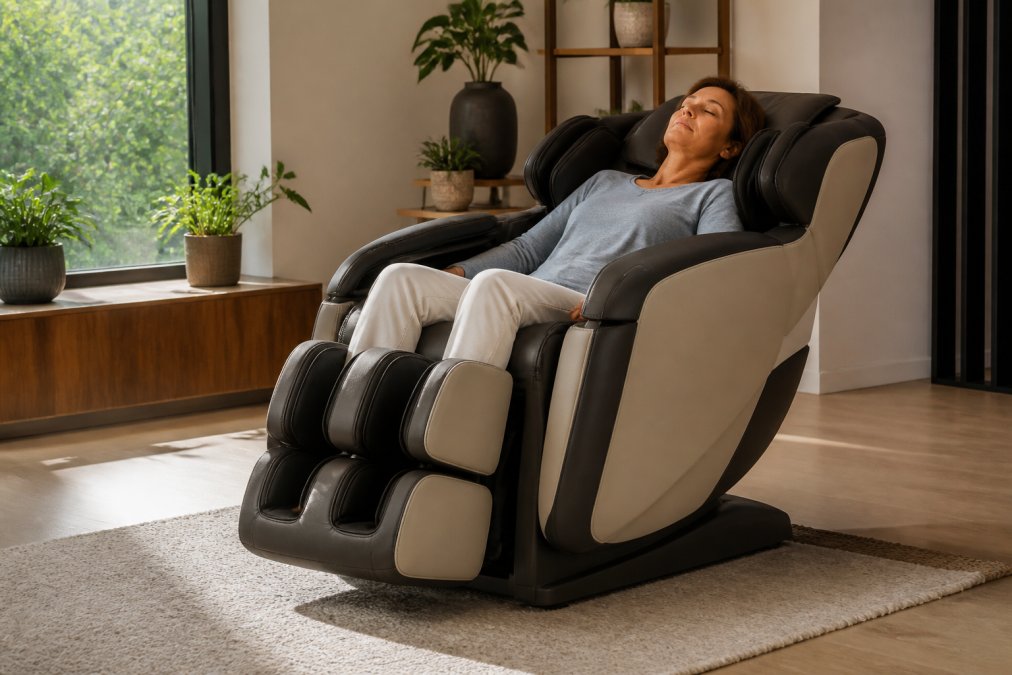
A massage chair delivers mechanical massage: motorized rollers, air compression, and vibration that manipulate soft tissue. The benefits center on reducing muscle tension, supporting blood circulation, and promoting relaxation through the nervous system.
Mechanical Massage and Muscle Tension
Deep tissue work on trigger points can release knots and reduce the guarding response, where muscles stay chronically tight to protect an injured area. Many users find this relieves the aching, heavy feeling from long hours of desk work. It is not a cure, but less tension means less day-to-day discomfort.
Zero Gravity and Spinal Decompression
Zero gravity positioning reclines the body so the legs sit above the heart, reducing pressure on the spine and encouraging vertebral alignment. This supports spinal decompression, giving compressed discs and tight lumbar muscles a chance to relax, often the single most noticeable benefit for lower back pain from prolonged sitting.
Best Massage Chairs for Back Pain: What to Look For
The best massage chairs for back pain share adjustable intensity, a track long enough to reach the neck and lumbar region, heat therapy, and a body-scanning system so rollers land on your muscles. Intensity control matters most: a chair offering only deep, aggressive massage will sit unused if your pain fluctuates.
| Feature | Why It Matters | Look For |
|---|---|---|
| Adjustable intensity | Matches massage to pain level | Multiple depth settings |
| Track length | Reaches neck to glutes | Full-length S or L track |
| Heat therapy | Loosens tight muscles | Integrated warming zones |
| Body scanning | Custom ergonomic fit | Auto body-mapping system |
| Zero gravity | Reduces spinal pressure | Recline past 120 degrees |
Bodyfriend Phantom Medical Care Massage Chair
The Bodyfriend Phantom is engineered for medical-grade muscle relief, targeting minor neck muscle pain alongside full-body relaxation. Its S&L track covers neck to thighs, and 4D precision lets you customize roller depth and intensity to mimic a therapist's technique. Zero gravity reduces spinal pressure, integrated heat loosens muscles, and Brain Massage Mode uses binaural beats for stress reduction. It is the strongest pick for pain concentrated in the neck and upper back.
Daiwa Relax 3D Massage Chair
The Daiwa Relax 3D is built around customization and full-body coverage. Its 3D body scanning maps your height, size, and weight so the massage adapts to your frame. The inversion stretch function decompresses the spine, the twist seat targets the lower back and hips, and triple reflexology rollers plus a calf and foot massager round out lower-body work.
How Long to Use a Massage Chair for Pain
Most people get the best results from 15 to 30 minute sessions, once or twice a day. Longer is not better, overuse can leave muscles sore and inflamed.
A practical routine:
- Start with 10 to 15 minutes on a gentle setting to gauge your response
- Build to 20 to 30 minutes as your body adapts
- Use it at consistent times, such as after work or before bed
- Skip days when pain is acute and use heat instead
- Reassess every few weeks whether it is still helping
Massage Chair Safety Precautions You Shouldn't Skip
Massage chairs are not appropriate for everyone, and most buying guides omit this. Mechanical massage moves tissue, compresses vessels, and applies sustained pressure over the spine and limbs. For most people that is therapeutic; for a smaller group it can be genuinely dangerous. The risk is not the chair, it is using the wrong modality, at the wrong intensity, on the wrong condition.
Who Should Avoid a Massage Chair Entirely
- Blood clots, deep vein thrombosis, or a history of embolism. Rolling and air compression can dislodge a clot. This is the single most serious contraindication, and it is not negotiable.
- Active infection, fever, or acute inflammation. Massage can spread infection through the lymphatic system and worsen swelling at the injury site.
- Recent fracture, spinal surgery, or joint replacement. Pressure on healing tissue can disrupt the repair process. Most surgeons advise waiting until cleared.
- Severe osteoporosis or known vertebral compression fractures. Deep roller pressure over a weakened spine can cause injury.
- Uncontrolled hypertension or severe heart disease. Aggressive full-body compression can affect blood pressure and cardiac load.
- Pregnancy. Certain acupressure points and deep abdominal or lumbar pressure are avoided. Some manufacturers explicitly warn against use during pregnancy; check the manual before assuming it is fine.
Who Should Get Medical Clearance First
- Diabetes with peripheral neuropathy. You may not feel pressure that is too strong. Set intensity low, cap sessions at 15 minutes, and have someone check the skin afterward for redness or bruising you did not notice.
- Rheumatoid arthritis or other inflammatory autoimmune conditions. Massage can feel good during a flare but may aggravate inflamed joints. Many rheumatologists advise gentle settings only, and only outside active flares.
- Fibromyalgia. Deep, aggressive pressure often triggers a flare rather than relieving one. Most practitioners find that short, gentle sessions with heat work better than deep-tissue programs.
- Sciatica with active nerve compression. Lumbar rollers can irritate a compressed nerve. If a session produces shooting pain down the leg, stop and do not repeat that program.
- Varicose veins or chronic venous insufficiency. Avoid strong compression on the affected legs.
- Cancer under active treatment. Some oncologists restrict massage near tumor sites or during certain therapies. Ask your care team.
Chair Features That Create the Most Risk
Not every program carries the same risk. When in doubt, avoid these until you have medical clearance:
Bodyfriend PHANTOM MEDICAL CARE Massage →
- Deep-tissue and 4D roller programs that apply sustained pressure along the spine
- Air compression on the calves and thighs, which is the mechanism most associated with clot concerns
- Inversion and stretch functions, which load the spine and hips
- Heat therapy, which is contraindicated over areas with reduced sensation, active inflammation, or circulatory problems
How to Use a Chair Safely If You Are in a Higher-Risk Group
- Get a diagnosis first. Undiagnosed pain is the worst case for mechanical massage, you cannot know what you are loading.
- Start at the lowest intensity for 10 minutes and stop there, even if it feels fine.
- Skip the spine directly. Use programs that target the shoulders, glutes, and legs instead of the lumbar rollers.
- Never use it on numb areas where you cannot feel excessive pressure.
- Stop immediately if you feel sharp pain, dizziness, numbness, or increased discomfort.
- Recheck with your clinician if your condition changes, a chair that was safe last year may not be safe after a new diagnosis.
A massage chair is not a diagnostic tool. If a session consistently produces the same pain in the same spot, that is a signal to get evaluated, not to push through. Mechanical massage can mask a problem as easily as it can relieve one.
The safest rule is simple: if a licensed clinician has not cleared you for deep-tissue massage, do not let a chair deliver it. Gentle, short, targeted sessions are almost always the better starting point, and for some conditions, the only appropriate one.
Massage Chairs vs. Physical Therapy and Chiropractic Care
A massage chair does not replace physical therapy or chiropractic care. Physical therapy addresses the root cause of chronic pain through guided strengthening, range of motion work, and posture correction; chiropractic care focuses on vertebral alignment and joint mobility. Both involve a trained professional assessing your condition, adjusting the plan as you progress, and catching problems a machine cannot.
The Diminishing Returns Nobody Warns You About
Here is the part most buying guides skip: a massage chair delivers the same mechanical input every session, and your body adapts. The first month, a 20-minute session may noticeably reduce tension. Six months in, many users report the same program feels less effective, not because the chair broke, but because the nervous system habituated.
A common pattern among long-term owners:
- Months 1-3: Strong perceived benefit. Tension drops, sleep improves, flare-ups feel shorter.
- Months 4-9: Benefit plateaus. The chair still feels good during use, but the effect does not carry as far into the day.
- Beyond 9 months: The chair becomes a comfort tool rather than a pain-management intervention. It helps you feel better in the moment; it does not change your baseline.
How to Get Real Value From a Chair Alongside Clinical Care
- Use it before therapy, not instead of it. A 10-minute gentle session before mobility work can make the work more productive.
- Track outcomes, not sessions. Note pain scores, sleep quality, and flare frequency weekly. If the numbers are flat for two months, the chair is not doing what you bought it for.
- Rotate programs. Changing intensity, target areas, and session length slows habituation and keeps the stimulus novel.
- Reassess annually. A chair that helped at year one may be redundant by year three if your clinical plan has progressed past it.
- Keep the receipt. A 30-day return window is your only real test of whether the chair fits your specific condition. Use it aggressively in that window.
The ROI Calculation, Honestly
You are not buying a replacement for a $150 therapy session, but daily, on-demand symptom management that supports your treatment work. That framing is fair only if you accept the ceiling: a chair can make a bad day more tolerable, but it will not make the bad days stop. Expect maintenance and you will likely be satisfied; expect resolution and you will be disappointed, and no return policy will fix that.
The most honest way to think about a massage chair is as a comfort and maintenance tool that sits alongside clinical care, not above it, not instead of it. Budget for it the way you would budget for a heating pad or a TENS unit: useful, supportive, and limited.

Frequently Asked Questions
Can chronic pain be cured or only managed?
Chronic pain is usually managed rather than cured, especially when it stems from arthritis, old injuries, or ongoing musculoskeletal conditions. Massage chairs can support that management by easing muscle tension, improving blood circulation, and reducing stiffness, but they do not treat the underlying cause. Think of a chair as one tool in a broader plan that may include physical therapy, movement, and guidance from your doctor.
How often should you use a massage chair for chronic pain relief?
Most people do well with one or two sessions per day, capped at 15 to 30 minutes each. Starting shorter, around 10 minutes, helps you gauge how your body responds. Consistency matters more than duration, so a daily 15-minute routine tends to beat an occasional hour-long session. If pain flares after a session, cut the time or intensity and check with your doctor.
What are the downsides of using a massage chair for pain?
Overuse can leave muscles sore, and too much intensity may aggravate trigger points rather than release them. Some people with certain conditions, including blood clots, recent fractures, or uncontrolled hypertension, should avoid mechanical massage unless a doctor approves it. Massage chairs also will not fix postural problems or structural issues on their own, so pair them with movement and professional care.
How do massage chairs compare to professional physical therapy?
Physical therapy targets the cause of chronic pain through guided exercise, manual therapy, and posture correction, while a massage chair delivers consistent mechanical massage at home between appointments. A chair cannot replace a therapist's assessment or hands-on treatment, but it can extend the benefits of therapy into your daily routine. Many people use both, leaning on the chair for maintenance and the therapist for progress.