






 (307) 441-5030
Table of Contents
- Why Home Recovery Deserves a Real Plan
- Active Recovery Exercises at Home You Can Do Tonight
- Post-Workout Nutrition for Muscle Growth at Home
- Best Home Recovery Tools for Athletes: What Actually Works
- Sleep, Stress, and Recovery Scheduling Based on Workout Intensity
- Psychological Recovery Techniques for Perceived Fatigue
- Common Mistakes That Slow Recovering From Workouts
- Conclusion
- Frequently Asked Questions
Last Updated: September 24, 2026
Why Home Recovery Deserves a Real Plan
Recovering from workouts at home effectively comes down to one principle: your body adapts during rest, not during training. Skip that rest and you stall. According to the American Council on Exercise, recovery is when muscle repair and tissue regeneration actually happen.
A real plan beats random rest days.
Active Recovery Exercises at Home You Can Do Tonight
Active recovery exercises at home are low-intensity movements that boost blood flow without adding training stress. A 15-20 minute session the day after a hard workout works well.
Low-Intensity Movement That Boosts Blood Flow
Easy movement raises circulation and helps clear metabolic waste. Good options:
- A 20-minute walk, indoors or out
- Slow cycling on a stationary bike
- Light bodyweight squats, 2 sets of 10
- Gentle yoga flow for 10 minutes
- Swimming or water walking if you have access
Mobility and Static Stretching for Sore Muscles
Static stretching works best after light movement, not before. Hold each stretch 30-45 seconds.
Post-Workout Nutrition for Muscle Growth at Home
Post-workout nutrition for muscle growth depends on three things: protein, carbs, and timing. Get all three within a few hours of training.
Protein, Carbs, and Nutrient Timing
Muscle protein synthesis needs amino acids, and glycogen replenishment needs carbs. Most people undereat both after training.
A simple home plate:
- 25-40 grams of protein (eggs, Greek yogurt, chicken, tofu)
- 30-60 grams of carbs (rice, oats, potatoes, fruit)
- A small amount of fat for satiety
Hydration and Electrolytes for Muscle Repair
Hydration supports blood flow, joint function, and muscle repair. Electrolytes replace what you lose through sweat.
Watch for these signs of poor hydration:
- Dark urine
- Headaches after training
- Muscle cramps
- Persistent fatigue
Best Home Recovery Tools for Athletes: What Actually Works
The best home recovery tools for athletes are the ones you'll actually use daily. That said, the highest-leverage tools are usually the cheapest ones, and most guides skip over them because they don't have a product page. Below is a tiered breakdown: household items first, then the gear that earns its price.
Household Items That Replace Expensive Gear
You can reproduce most of what a massage therapist or a recovery studio does with items already in your kitchen. The mechanism is the same in every case: sustained pressure on a trigger point or along a muscle belly reduces local tension and increases blood flow to the area.
- Tennis ball or lacrosse ball: Place it between your back and a wall, or sit on it for glutes and hamstrings. Roll slowly until you find a tender spot, then hold steady pressure for 30-60 seconds until the sensation fades. A lacrosse ball is firmer and reaches deeper; a tennis ball is better for sensitive areas like the upper back.
- Rolling pin: Works like a foam roller for calves, quads, and forearms. Roll lengthwise along the muscle, not across joints, for 60-90 seconds per area.
- Frozen water bottle: A rolling pin substitute that adds cold therapy at the same time. Useful for shin splints and plantar fascia after a run.
- Golf ball: Best for feet and small spots like the arch or the tissue around the shoulder blade.
- A pair of socks filled with dry rice, microwaved 60-90 seconds: A reusable moist-heat pack for tight lower back or shoulders.
When Gear Is Worth the Money
Household tools cover trigger points and small areas. Gear earns its price when it covers large areas, saves time, or adds a modality you can't replicate at home.
Compression, Light Therapy, and Massage Chairs Compared
| Tool | Best For | Time Per Session | Where It Helps Most |
|---|---|---|---|
| Tennis or lacrosse ball | Trigger points, glutes, back | 2-5 min per spot | Glutes, upper back, feet |
| Rolling pin or frozen bottle | Large muscle bellies | 60-90 sec per area | Calves, quads, forearms |
| Compression boots | Leg soreness, swelling | 20-30 min | Calves, thighs, feet |
| Infrared lamp | Targeted joint pain | 10-20 min | Knees, back, shoulders |
| Recovery glove | Hand and wrist stiffness | 10-20 min | Hands, wrists, elbows |
| Massage chair | Full-body tension | 15-30 min | Back, neck, calves |
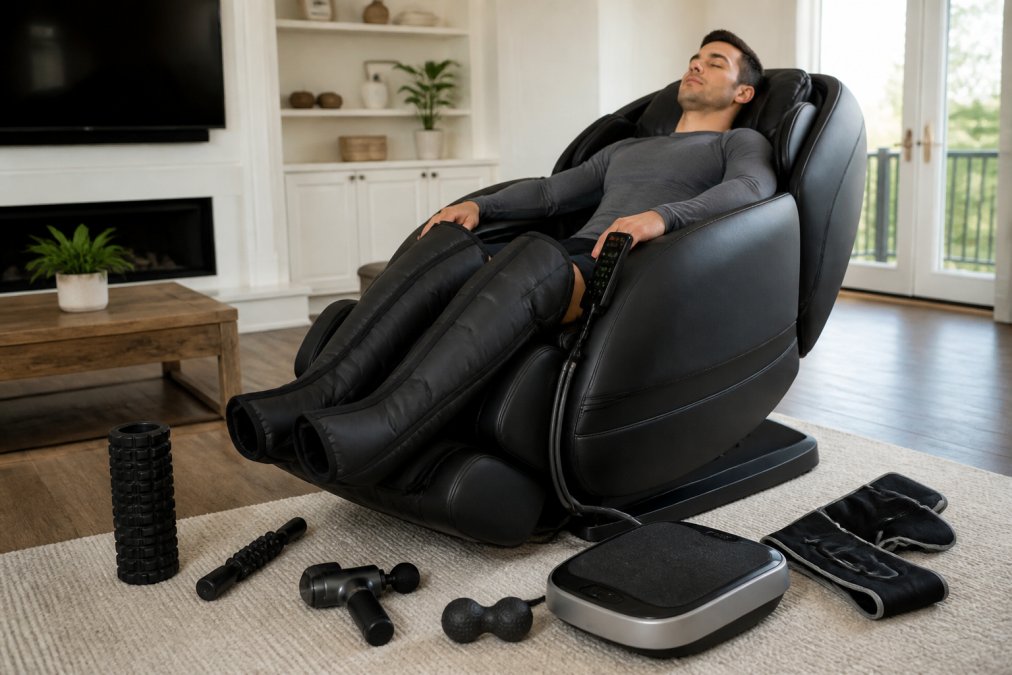
For full-body relief, a massage chair covers more ground in one session. The Bosscare Premium Full Body Zero Gravity Massage Chair uses body-scanning tech and heat therapy to target the back, neck, and calves.


A Simple Decision Rule
If the soreness is in one small spot, use a ball. If it's across a whole muscle group, use a rolling pin or foam roller. If it's your whole lower body and you're short on time, that's when boots or a chair pay for themselves. Buy gear last, not first.
Sleep, Stress, and Recovery Scheduling Based on Workout Intensity
Recovery scheduling should match your training load, not a fixed calendar. Hard sessions need more downtime than easy ones, and the type of session changes what your body actually needs back. Most guides say "listen to your body" and stop there. This section gives you a framework you can actually run.
Echelon Professional-Grade Compression →
Build a Recovery Calendar Around Session Type
Sort every workout into one of three buckets, then apply the matching recovery protocol for the 24 hours after.
HIIT or intervals (high nervous-system load, moderate muscle damage)
- Sleep: 8-9 hours, non-negotiable. Nervous-system recovery is the bottleneck here, not muscle repair.
- Movement: 10-15 minutes of easy walking the next day. Skip intense mobility work.
- Nutrition: prioritize carbs over protein. Glycogen is what you burned.
- Tools: 10-15 minutes of compression or a warm shower. Skip deep-tissue work for 24 hours.
Heavy strength training (high muscle damage, moderate nervous-system load)
- Sleep: 7-9 hours.
- Movement: 15-20 minutes of easy movement plus static stretching of the muscles you trained.
- Nutrition: 25-40 grams of protein within a few hours, plus carbs.
- Tools: self-massage with a ball or rolling pin on the trained muscles, 2-5 minutes per area.
Long endurance work (high fluid and glycogen loss, low muscle damage)
- Sleep: 7-9 hours, plus a nap if you can fit one.
- Movement: easy walk or swim the next day.
- Nutrition: replace fluids and electrolytes first, then protein and carbs.
- Tools: compression boots for 20-30 minutes to move fluid out of the legs.
A One-Week Template
A common pattern that works for most recreational athletes:

- Monday (hard strength): 8-9 hours sleep, full nutrition, one self-massage session.
- Tuesday (moderate cardio): 7-8 hours sleep, normal meals, 15-minute walk.
- Wednesday (HIIT): 8-9 hours sleep, carb-forward meals, 10-minute compression session.
- Thursday (rest): prioritize sleep and stress reduction. No tools needed.
- Friday (hard strength): same as Monday.
- Saturday (long endurance): fluids and electrolytes, compression boots in the evening.
- Sunday (rest): sleep, food, light movement.
Adjust the ratios to your sport, but keep the principle: hard days get more recovery inputs, easy days get fewer.
Sleep Is the Single Biggest Lever
Poor sleep hygiene and a disrupted circadian rhythm raise cortisol levels and slow muscle repair. Adding an hour of sleep often beats adding any recovery tool. Keep a consistent wake time, get morning light, and keep the room cool and dark.
Watch for Overtraining Syndrome
Signs include a rising resting heart rate, poor sleep, and constant perceived fatigue. When those show up, cut volume before you cut sleep. Sleep is the recovery input; training volume is the stressor. Reducing the stressor is faster than trying to out-recover it.
Psychological Recovery Techniques for Perceived Fatigue
Perceived fatigue often outlasts physical fatigue. Your nervous system needs to switch off, not just your muscles.
- Breathe in for 4 seconds
- Hold for 4 seconds
- Breathe out for 6 seconds
- Repeat for 5 minutes
Other techniques that help:
- Ten minutes of quiet, no screens
- A warm shower or sauna session
- Light reading before bed
- Journaling for two minutes
Common Mistakes That Slow Recovering From Workouts
Most recovery stalls come from a handful of repeat mistakes. Here's how to fix each one.
| Mistake | Why It Hurts | Fix |
|---|---|---|
| Training hard every day | No time for muscle repair | Schedule 1-2 rest days |
| Skipping post-workout food | Slows glycogen replenishment | Eat protein and carbs within hours |
| Drinking only water after long sessions | Misses electrolytes | Add sodium and potassium |
| Stretching cold muscles | Raises injury risk | Move first, stretch second |
| Ignoring sleep | Raises cortisol levels | Aim for 7-9 hours |
| Using recovery tools at max intensity daily | Adds stress, not relief | Match intensity to load |
The biggest recovery gain usually comes from sleep and food, not gear. Fix those two first, then add tools.
Conclusion
Recovering from workouts at home effectively isn't about buying the most equipment. It's about sleep, food, movement, and stress control, done consistently.
Frequently Asked Questions
What is the best way to recover quickly after a workout at home?
Combine active recovery, nutrition, and sleep. Do 10 to 20 minutes of low-intensity movement like walking or cycling, eat protein and carbs within two hours, drink water with electrolytes, and aim for 7 to 9 hours of sleep. Compression boots and light therapy tools can add circulation support between sessions. Consistency across these habits matters more than any single method for recovering from workouts at home effectively.
What active recovery exercises at home work best for sore legs?
Walking, easy cycling on a stationary bike, and bodyweight mobility drills like leg swings and hip circles all raise blood flow without adding muscle damage. Foam rolling and gentle static stretching after the movement can reduce stiffness. Keep intensity low enough that you can hold a conversation. Ten to fifteen minutes is usually enough to ease delayed-onset muscle soreness without interfering with tissue regeneration.
How does post-workout nutrition for muscle growth support recovery?
Eating protein and carbohydrates after training supports muscle protein synthesis and replenishes glycogen. A common target is 20 to 40 grams of protein plus a serving of carbs within a couple of hours of finishing. Pair that with fluids and electrolytes to replace what you lost through sweat. Nutrient timing helps, but total daily intake matters more for long-term muscle repair and growth.
Are home wellness tools like saunas and massage chairs effective for recovery?
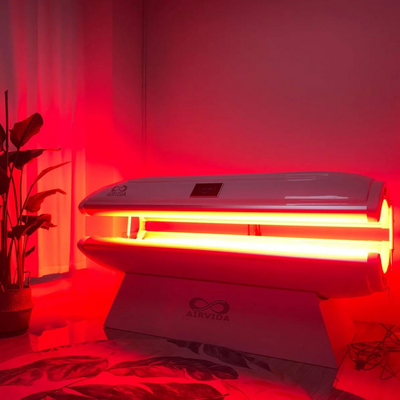
Tools such as compression boots, infrared lamps, red light therapy devices, and massage chairs can support circulation, reduce perceived soreness, and help you relax. They work best as part of a broader routine that includes sleep, nutrition, and active recovery. Look for products with clear specifications and return policies so you can test whether they fit your body and schedule before committing long term.