






 (307) 441-5030
Last Updated: October 22, 2026
Quick Summary
How cold is Joe Rogan's cold plunge? It runs at roughly 33°F to 34°F, just above the freezing point of water, the figure Rogan himself has pointed to in social posts. Treat 33°F to 34°F as the best-supported number for his home plunge.
- Rogan posted on Instagram in 2022 that 34 degrees does a body good.
- A standard cold plunge is usually held between 40°F and 50°F.
- Rogan uses an ice-making plunge with a chiller and ice maker, not a stock tank.
- Beginners should start at 50°F to 59°F for 1 to 3 minutes.
- Never plunge alone, especially in near-freezing water.
Table of Contents
- Joe Rogan's Cold Plunge Temperature: The Short Answer
- Why the Reported Numbers Differ: 33°F vs. 34°F vs. 37°F
- Why Rogan Keeps the Water Near Freezing
- What Kind of Ice Bath Does Joe Rogan Use?
- How Long Does Joe Rogan Stay in the Cold Plunge?
- Cold Plunge Temperature for Beginners: Where to Actually Start
- How Long to Stay in a Cold Plunge (Without Copying a Pro)
- Cold Plunge Safety: What the 33°F Number Means for You
- Frequently Asked Questions
Joe Rogan's Cold Plunge Temperature: The Short Answer
How cold is Joe Rogan's cold plunge? It runs at roughly 33°F to 34°F, just above the freezing point of water. That's the number his own social posts point to. In 2022, Rogan posted on Instagram, "34 degrees does a body good!" (Joe Rogan's Instagram post on his plunge temperature).
A cold plunge is an immersion tub filled with chilled water, usually held between 40°F and 50°F for recovery and training purposes. Rogan's sits well below that range.
Here's the part most guides skip. A near-freezing plunge is not a magic number you should copy. The temperature only works because of how long he stays in and how often he does it.
Why the Reported Numbers Differ: 33°F vs. 34°F vs. 37°F
So how cold is Joe Rogan's cold plunge? The short answer is 33°F to 34°F, but that figure sits inside a wider spread of claims. Search results and social posts cite 33-34°F, 37°F, 39-50°F, and even a 42.5°F reading from a social post. Those numbers are not all describing the same thing, and treating them as competing answers is where most guides go wrong.
Here is how to read the spread:
- 33°F to 34°F, the figure Rogan himself has pointed to in social posts and the one most reports attach to his home plunge. Treat it as the best-supported number for his personal setup.
- 37°F, a plausible reading for a separate tub or a different date. A studio plunge and a home plunge can be set differently, and a single thermometer reading only captures one moment.
- 39°F to 50°F, a range that usually describes standard cold plunges or general ice-bath guidance, not Rogan's specific tub. When an article lists this range, it is often answering "how cold should a cold plunge be" rather than "how cold is Rogan's."
- 42.5°F, a social-post reading that may reflect a different tub, a different day, or water that had warmed between sessions. A single post is a snapshot, not a spec.
So why do the numbers drift? A few practical reasons:
- Measurement point. A thermometer clipped near the surface reads warmer than water near the bottom or next to the chiller outlet. Ice and circulation create temperature layers inside the tub.
- Ice versus chiller. Adding ice drops the reading fast and can push water below the chiller's set point. A chiller holds a steady target.
- Two different tubs. A home plunge and a studio plunge can be set differently, and often are.
- Date and context. A reading from 2022 is not a reading from today. Tubs get replaced, chillers get serviced, and routines change.
The takeaway: treat 33°F to 34°F as the best-supported figure for his home plunge, 37°F as a plausible reading for a separate setup, and the 39-50°F range as general cold-plunge guidance rather than a Rogan-specific number. When you see a temperature claim, ask what it is measuring and when it was posted before you compare it to another figure.
Why Rogan Keeps the Water Near Freezing
Near-freezing water is a deliberate choice, not a flex. Cold-water immersion at the low end of the range delivers a stronger stimulus per minute, which means shorter sessions. For someone with a packed schedule, that trade makes sense.
Cold exposure also triggers a sharp norepinephrine response, the chemical behind the alert, awake feeling people describe after a plunge. The Cleveland Clinic's overview of cold water immersion notes that cold water immersion can affect circulation, inflammation, and mood, while also flagging that the research is still developing.
The catch is that colder isn't automatically better. Past a certain point, you're just adding discomfort and risk without adding benefit. Rogan has years of acclimation behind him. A first-timer at 34°F is a different situation entirely.
What Kind of Ice Bath Does Joe Rogan Use?
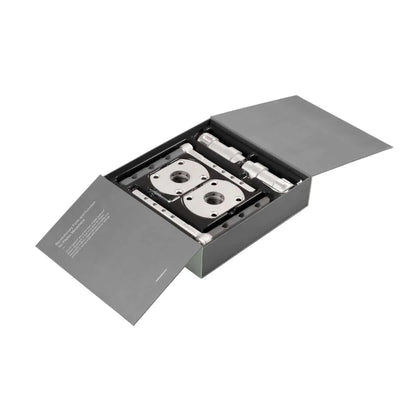
Rogan uses a dedicated plunge tub built for ice-making, not a stock tank filled from the tap. Reports describe a stainless steel style unit with a chiller and an ice-maker working together to hold water in the low 30s Fahrenheit. That's a different machine from the typical home cold plunge.
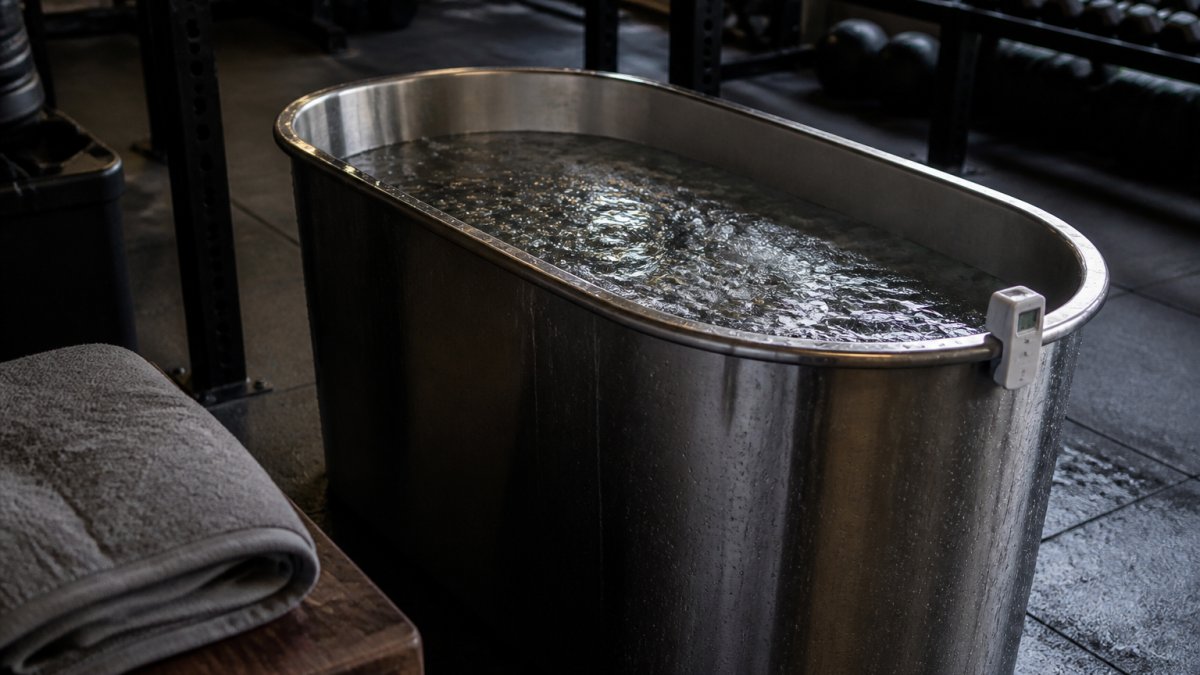
The key difference is how the cold gets made.
Ice-Making Plunge vs. Standard Cold Plunge
A standard cold plunge uses a chiller to pull water down to a set point, usually somewhere in the 40s. An ice-making plunge goes further. It actively forms ice to push the water toward freezing, which is how you hold 33°F to 34°F reliably.
| Feature | Ice-Making Plunge | Standard Cold Plunge |
|---|---|---|
| Typical temperature | 33°F to 37°F | 40°F to 50°F |
| How cold is made | Ice maker plus chiller | Chiller only |
| Session length | Shorter | Longer |
| Maintenance load | Higher | Lower |
| Best for | Experienced users | Most home users |
If you're shopping for a home unit, this distinction matters more than any brand claim. Ask one question: can it hold a set temperature overnight without you adding ice by hand?
How Long Does Joe Rogan Stay in the Cold Plunge?
Session length reports vary, with some accounts suggesting 10 to 20 minutes. Treat those figures as unverified. Rogan himself has not published a stopwatch log, and the sources repeating the numbers do not cite one.
What we can say is that duration and temperature trade off against each other. A 34°F plunge for 20 minutes is a very different dose than a 34°F plunge for 3 minutes.
There is also an individual-response layer. Body composition, cold tolerance, prior acclimation, and even how much you ate that day shift how long you can safely stay. Two people in the same 34°F tub will have different limits.
A practical read: if you are new, minutes matter more than degrees. Get comfortable with short sessions first, and judge your session by how you feel and how quickly you recover, not by someone else's reported time. When you see a duration claim, ask three questions: what was the water temperature, how was it measured, and when was the claim posted? Without those, the number is a story, not a protocol.
Cold Plunge Temperature for Beginners: Where to Actually Start
Beginners should start warmer than they think. A cold plunge temperature for beginners of 50°F to 59°F is a sensible entry point, with sessions of 1 to 3 minutes. That's cold enough to get the alert, awake effect without the shock of near-freezing water.
Here's a simple starter protocol:
- Week 1-2: 55°F to 59°F, 60 to 90 seconds, 3 sessions per week
- Week 3-4: 50°F to 55°F, 2 to 3 minutes, 3 to 4 sessions per week
- Week 5-8: 45°F to 50°F, 3 to 5 minutes, as tolerated
- Beyond: Hold your temperature and extend time before you drop degrees
Step in slowly, keep your hands out if you need to, and breathe out hard through the first 30 seconds. That first half-minute is where the shock lives.
How Long to Stay in a Cold Plunge (Without Copying a Pro)
How long to stay in a cold plunge depends on the water temperature and your experience, not on someone else's routine. A useful rule: colder water means shorter sessions. At 50°F, 3 to 5 minutes is reasonable for most people. At 40°F, 1 to 3 minutes is plenty. At 34°F, keep it brief and only after months of acclimation.
| Water Temperature | Beginner | Experienced |
|---|---|---|
| 55°F to 59°F | 1 to 2 min | 5 to 10 min |
| 45°F to 54°F | 1 to 2 min | 3 to 6 min |
| 40°F to 44°F | Not advised | 2 to 4 min |
| 33°F to 39°F | Not advised | 1 to 3 min |
These are general ranges, not medical advice. Your cold tolerance, body composition, and health history all shift the numbers.
Cold Plunge Safety: What the 33°F Number Means for You
Cold plunge safety starts with one fact: 33°F water is close enough to freezing that your body loses heat fast. Cold shock, gasping, and a racing heart are normal in the first 30 seconds. They're also where accidents happen.
Keep these rules in mind:
- Never plunge alone, especially in near-freezing water.
- Skip the plunge if you have a heart condition, uncontrolled blood pressure, or you're pregnant, and check with a doctor first.
- Get out if you start shivering hard, feel numb, or your thinking gets foggy.
- Warm up slowly afterward with dry layers, not a hot shower right away.
The National Center for Cold Water Safety stresses that cold shock is the leading danger in cold-water immersion, not hypothermia. That's why the first 60 seconds deserve your full attention.
At Logic Health, we stock recovery and wellness gear built for home use, with free shipping on orders over $200 and a 30-day return policy.
Frequently Asked Questions
What cold plunge does Joe Rogan use?
Reports describe Rogan's setup as an ice-making plunge rather than a simple tub of chilled tap water. Manufacturer and retailer pages put his home plunge at roughly 33-34°F, while one account lists a separate studio plunge at about 37°F. An ice-making unit actively forms ice and circulates water to hold a set temperature, which is why it can sit within a degree or two of freezing. Standard cold plunges typically rely on a chiller and usually sit higher, often in the 40s.
Is 33°F too cold for a cold plunge?
For most people, yes, at least to start. Water at 33°F is a degree above freezing, and cold-water immersion at that temperature drives a sharp cold-shock response: gasping, rapid breathing, and a spike in heart rate and blood pressure. Rogan's temperature reflects years of acclimation, not a starting point. Beginners do better in the 50-60°F range and work down slowly. Anyone with a heart condition, uncontrolled blood pressure, or pregnancy should talk to a doctor before trying cold plunge safety protocols at any temperature.
How long should a beginner stay in a cold plunge?
Start with 30 to 60 seconds at a moderate temperature, around 50-60°F, and add time before you add cold. Once a minute feels manageable, extend toward 2-3 minutes. The practical ceiling for most recreational plungers is about 10 minutes, and there is no benefit to pushing past shivering you cannot control. How long to stay in a cold plunge matters less than consistency: three or four short sessions a week beats one long, miserable one. Get out if you feel dizzy, numb, or start shivering hard.
Does Joe Rogan plunge every day?
Rogan has described cold plunging as part of a morning routine, and social posts point to regular use rather than an occasional stunt. The available sources do not document a strict daily schedule, so treat claims of a fixed daily protocol with caution. What the reporting does support is that his water is held near freezing, around 33-34°F, and that he treats the plunge as a repeatable habit. For your own routine, frequency matters more than matching someone else's temperature.
Rogan's plunge sits at the extreme end of the range, and that's the point: it's his protocol, built over years. Your job is to find the temperature and duration you'll repeat safely. Logic Health carries science-backed recovery equipment, from cold plunge and sauna options to massage chairs, with 24/7 customer support and secure checkout. Get started with Logic Health and build a recovery routine you can sustain.