






 (307) 441-5030
Last Updated: October 25, 2026
Quick Summary
Space saving home gym equipment is worth it when you measure clear floor area and operating clearance before buying, not budget. Folding treadmills, adjustable dumbbells, and foldable benches cover cardio, strength, and mobility without a dedicated room, and most picks here cost under $600.
- Measure the clear floor you can give up, then subtract the machine's operating clearance while in use.
- A complete small-space setup fills three slots: cardio, strength, and mobility.
- The MATE-FB1 folding bench supports up to 880 lbs and cuts storage footprint up to 80%.
- The Echelon adjustable dumbbell set spans 7 to 52.5 lbs with one-second weight changes.
- Every Logic Health order over $200 ships free with a 30-day return policy.
Table of Contents
- The Best Home Gym for Small Spaces Starts With One Number
- Quick Comparison: 10 Space Saving Home Gym Equipment Picks
- Small Space Workout Equipment That Covers Cardio, Strength, and Mobility
- Foldable Exercise Equipment: What Folds, What Doesn't, and Why It Matters
- Apartment Workout Equipment: Noise, Vibration, and Floor Protection
- Matching Space Saving Home Gym Equipment to Your Budget and Training Goal
- What to Check Before You Order: Dimensions, Weight Limits, and Assembly
- Building Your Compact Setup with Logic Health
- Frequently Asked Questions
The Best Home Gym for Small Spaces Starts With One Number
The number is your floor area, not your budget.
The category is growing fast. Mordor Intelligence's home fitness equipment forecast projects the global market rising from USD 11.84 billion in 2026 to USD 17.06 billion by 2031, a 7.59% compound annual growth rate.
Here is what most guides get wrong. They rank products by features and treat footprint as a footnote. In practice, footprint is the deciding spec.
Below, we break down ten picks, the trade-offs behind each category, and the exact checks to run before you order.
Quick Comparison: 10 Space Saving Home Gym Equipment Picks
Every pick below is a Logic Health product, priced as listed. We rank them by how much floor they free up relative to what they train.
| Pick | Price | Footprint Profile | Best For |
|---|---|---|---|
| Rovix Folding Treadmill 3.5HP | $499.97 | Folds hydraulically, transport wheels | Runners who need incline |
| WalkingPad MX8 | $549.00 | Folds in half, stores upright | Walking and light jogging |
| Rovix Under-Desk Treadmill | $299.97 | Slim, arrives assembled | Desk workers |
| W1B 3-in-1 Foldable Bike | $399.00 | Folds to 27.8 x 18.7 x 30.7 in | Cardio plus desk use |
| Rovix Foldable Water Rower | $499.97 | Folds in half, built-in wheels | Full-body low impact |
| MATE-FB1 Folding Bench | $129.00 | Cuts storage footprint up to 80% | Strength and core work |
| Echelon Adjustable Dumbbells | $599.99 | 7 to 52.5 lbs in one stand | Replacing a rack |
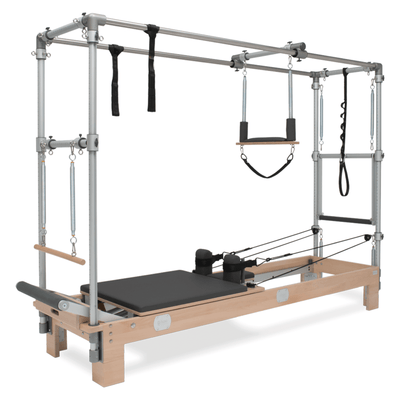
| Core Pilates Apex Reformer | $699.97 | Foldable, non-slip base | Pilates at home |
| BASI Systems Wall Unit | $2,000.00 | Wall-mounted, 5.5 in deep | Vertical training |
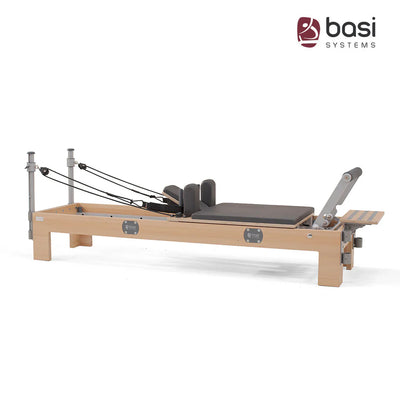
| BASI Systems Compact Reformer | $5,500.00 | 81.5 x 23.6 in frame | Studio-grade Pilates |
The Rovix Portable 3.5HP Space Saving Folding Treadmill is the pick most people land on first, and for good reason: a 3.5HP motor, 12 preset programs, and three manual incline settings in a frame that folds with a hydraulic lever.

Small Space Workout Equipment That Covers Cardio, Strength, and Mobility
A complete small-space setup needs three slots filled: cardio, strength, and mobility. Most people buy two and improvise the third, then wonder why they plateau.
Cardio is the easiest slot to solve. A folding treadmill or a compact stepper handles it without permanent floor loss.
Strength is where adjustable gear earns its price. A foldable multi-functional weight bench covers presses, rows, and leg work while folding away between sessions.
Mobility is the slot people skip.
Fill those three slots and you have a full-body workout without a dedicated room. Miss one and you will be back at the gym within a month.
Foldable Exercise Equipment: What Folds, What Doesn't, and Why It Matters
Foldable does not mean portable. That distinction decides whether a machine actually saves you space or just saves it awkwardly.
Three folding types exist, and they behave differently:
- Vertical fold: the deck folds in half and stands against a wall. Best space savings, needs wall clearance.
- Hydraulic fold: a lever lifts the deck to a locked upright position. Easier on your back, heavier to move.
- Flat fold: the frame collapses but stays low. Good under furniture, poor for tight corners.
The W1B 3-in-1 Foldable Exercise Bike shows how much folding matters in practice. It collapses to 27.8 x 18.7 x 30.7 inches and runs on magnetic resistance with no electricity required, so it stores in a closet and works anywhere.

What does not fold: water rowers with large tanks, most reformers over a certain size, and anything with a fixed welded frame.
Apartment Workout Equipment: Noise, Vibration, and Floor Protection
Noise is the spec nobody lists and every downstairs neighbor notices.
Rovix Portable 3.5HP Space Saving Folding Treadmill W/ Incline & 12 Preset →
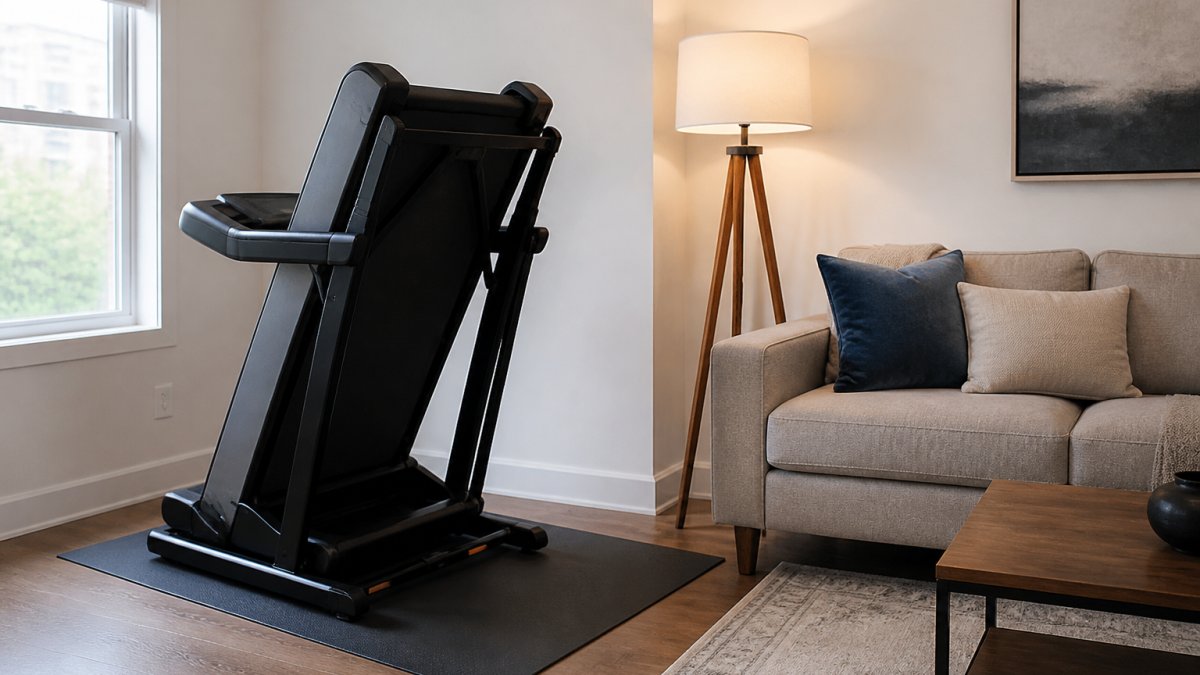
Vibration travels through floors more than sound does. Two fixes cost little and solve most complaints: a dense rubber mat under the machine, and cushioning built into the deck.
Watch out: skipping the mat on a second-floor apartment is the most common mistake we see. The machine is not the problem; the transfer of vibration through a wood subfloor is.
Matching Space Saving Home Gym Equipment to Your Budget and Training Goal
Budget should follow goal, not the other way around. Spending $500 on the wrong category wastes more than spending $700 on the right one, because the wrong machine takes up floor space whether you use it or not.
PT Pioneer's home fitness statistics report that 38.6% of home fitness equipment users spent under $500 on a single piece of equipment.
Start by naming your primary goal. Most people have one, and pretending you have three is how closets fill up with unused gear.
- Strength first: adjustable dumbbells plus a folding bench. The Echelon set at $599.99 and the MATE-FB1 at $129.00 together cover presses, rows, split squats, and core work in roughly the footprint of a coffee table. This pairing beats a single $700 machine for strength because it trains more movement patterns.
- Cardio first: a folding treadmill or a foldable bike. The Rovix Folding Treadmill at $499.97 handles running and incline work; the W1B 3-in-1 at $399.00 handles lower-impact cardio and doubles as a desk bike. Pick based on whether you run or walk.
- Mobility and full-body first: a foldable Pilates reformer or a water rower. The Core Pilates Apex Reformer at $699.97 and the Rovix Foldable Water Rower at $499.97 both train the whole body through a range of motion rather than isolating one system.
A practical way to allocate by dollar tier:
- Under $300: under-desk treadmill ($299.97) or a folding bench ($129.00). Start with movement or strength, not both. At this tier, accept that you are buying one training slot, not a gym.
- $300 to $600: foldable bike ($399.00), folding treadmill ($499.97), water rower ($499.97), or adjustable dumbbells ($599.99). One serious machine that will last. This is the sweet spot for most first purchases.
- $600 to $1,500: a reformer ($699.97) or a strength-plus-cardio pair. You are now buying variety, not just one slot.
If your goal is strength and your floor is tight, buy the bench and the dumbbells before you buy any cardio machine, cardio is the easiest slot to fill later with a walk or a jump rope.
One more rule: do not buy two machines in the same category. Two cardio machines in a small room is the most common budget mistake we see, because the second one adds no training variety and takes the floor the first one needs.
What to Check Before You Order: Dimensions, Weight Limits, and Assembly
Four checks prevent almost every return. Run them in this order, and do the arithmetic on paper before you open a product page. For a deeper walkthrough, see this guide to choosing home recovery equipment.
- Folded and unfolded dimensions, and the clearance between them. Both matter, and the gap between them is where most returns happen. Measure the wall or closet, then add two inches of clearance on every side the machine moves toward. A treadmill that folds to 40 inches wide still needs 40 inches of wall plus room to swing the deck up. Write down three numbers: stored width, stored depth, and the operating clearance the deck or arms need while in use.
- Ceiling height for anything that stands, folds up, or mounts. A vertical-fold treadmill standing upright can reach 60 inches or more; a wall-mounted Pilates unit needs clear wall above the mounting point. Measure floor to ceiling, then subtract the stored height plus a few inches of lift clearance. If you are under about 8 feet, test the fold in the room, not in the showroom.
- Weight capacity against your body weight plus load. The Rovix folding treadmill supports 330 lbs; the MATE-FB1 bench supports 880 lbs; the water rower supports 264 lbs. Add your body weight, the weight of any plates or dumbbells you will use on the machine, and a margin. A bench rated at 880 lbs is not overkill, it is what lets you press heavy dumbbells without flex.
- Assembly, delivery, and the door it has to fit through. Some units arrive fully assembled, like the Rovix under-desk treadmill. Others need an hour and two people. Check the shipping box dimensions against your stairwell, elevator, and doorways before delivery day, a folded machine that fits the room but not the hallway is still a return.
- Return window and shipping terms. Confirm the policy before the box arrives, not after. Note whether return shipping is on you and whether the item must be in original packaging.
A worked example makes the arithmetic concrete. Suppose you have a 10-foot by 12-foot bedroom and want to keep a 3-foot walking lane to the closet. That leaves roughly 7 feet by 9 feet of usable floor, minus the bed. A folding treadmill needs about 30 square feet in use; a folding bench needs a fraction of that and stores against a wall. If the treadmill's operating clearance would block the closet lane, the bench-and-dumbbells pairing wins on fit even if the treadmill wins on features.
Building Your Compact Setup with Logic Health
The best space saving home gym is the one you will actually use, and that usually means fewer machines, chosen well.
At Logic Health, we stock the pieces that make a compact setup work: folding treadmills, adjustable dumbbells, foldable benches, and wall-mounted Pilates units.
Get started with Logic Health and build a home gym that fits the room you already have.
Frequently Asked Questions
What is the smallest space I need for a home gym?
Plan for operating clearance, not just the machine's footprint. A folding treadmill or a compact Pilates reformer can work in a corner of a spare room, but you still need enough room to step on, step off, and move your arms without hitting a wall. Measure the floor plus two feet of clearance on the sides you use.
Is space saving home gym equipment worth the money?
It is worth it if you will actually use it. The risk is buying compact gear that stays folded. A $129 folding bench or a $299.97 under-desk treadmill keeps the commitment low while you build the habit.
Are foldable treadmills and exercise bikes worth it for small spaces?
Yes, when the fold is real and the motor is quiet. The WalkingPad MX8 folds its deck in half and stores upright against a wall, runs at 1 to 5 MPH, and its 2.25 HP motor stays below 65 dB, which matters in an apartment. The W1B 3-in-1 Foldable Exercise Bike folds to 27.8 x 18.7 x 30.7 inches and needs no electricity. Check the folded dimensions against your closet or wall gap before ordering, and confirm the weight capacity suits every user in the household.
How can you store home gym equipment in a small apartment?
Choose gear that folds flat or hangs on a wall. The MATE-FB1 Folding Weight Bench folds with one pull and cuts its storage footprint by up to 80%, so it fits in a closet or under furniture. The BASI Systems Pilates Wall Unit mounts flush to the wall at 32 inches wide and 5.5 inches deep, turning unused vertical space into a full Pilates station. For everything else, keep a dedicated storage zone, use the built-in transport wheels on treadmills and rowers, and avoid stacking loose weights where you walk.
What home gym equipment takes up the least space?
Adjustable dumbbells and resistance bands take the least floor area per exercise. The Echelon Adjustable Dumbbells with Stand replace a full rack with a range from 7 to 52.5 lbs and change weight in about one second using locking pins. A folding bench adds pressing and rowing angles without a permanent footprint. If you want cardio too, an under-desk treadmill like the Rovix 2HP model at $299.97 slides under furniture or against a wall and arrives fully assembled, so it takes up space only while you walk.