






 (307) 441-5030
Last Updated: November 9, 2026
Quick Summary
Red light therapy panels are worth it for home recovery when you match wavelength, irradiance and dose to your treatment area. Recovery-focused devices use red (630 to 660 nm) and near-infrared (810 to 850 nm) light, and our lineup runs from the $249.00 Thera Tri-Lite pad to the $5,999.00 Health Smart Large panel.
- Power at distance separates serious panels from decorative ones, so check irradiance at 6 to 36 inches.
- Dose is irradiance multiplied by time, so track dose and distance rather than chasing longer sessions.
- A modest session four times a week beats one long session followed by five days off.
- The $699.00 Health Smart Mini suits targeted post-workout soreness and small treatment areas.
- Used four times a week for three years, a $5,999.00 panel works out to roughly $9.60 per session.
Table of Contents
- What to Look for in Red Light Therapy Panels for Recovery
-
The 5 Best Red Light Therapy Panels for Home Recovery in 2026
- Health Smart Red Light Therapy Panel (Large): Best for Full-Body Recovery
- Health Smart Red Light Therapy Panel (Medium): Best Mid-Size Option
- Health Smart Red Light Therapy Panel (Mini): Best for Targeted Muscle Repair
- Thera Tri-Lite: Best Flexible, Medical-Grade Pad
- Helio Spark: Best Compact Panel for Skin and Everyday Wellness
- How to Build Red Light Therapy Recovery Protocols That Work
- Why Medical-Grade Red Light Therapy Devices Cost More
- What the Evidence Says About Light Therapy and Recovery
- Cost of Ownership and Value Over Time
- Choosing Your Red Light Therapy Panel at Logic Health
- Frequently Asked Questions
What to Look for in Red Light Therapy Panels for Recovery
Independent testing of eight brands across 15 metrics, including irradiance measured at 6 to 36 inches, found that power at distance separates serious panels from decorative ones (Light Therapy Insiders testing methodology). At Logic Health, we use that same lens when we evaluate equipment for recovery.
Red light therapy panels are LED devices that emit red and near-infrared light at specific wavelengths to support cellular energy production, circulation, and tissue repair. Three specifications decide whether a panel is worth your money:
Wavelengths, Irradiance, and Dose
Recovery-focused devices work in the red (630 to 660 nm) and near-infrared (810 to 850 nm) ranges, according to TrueMed's technical specifications. Irradiance, measured in mW/cm², tells you how much light reaches tissue per second. Dose combines irradiance with session time. A bright panel at 36 inches can deliver less useful dose than a moderate panel at 6 inches.
Coverage Area, Size, and Portability
Full-body recovery calls for a large panel. Targeted muscle repair needs a smaller, moveable unit. Flexible pads wrap joints that rigid panels cannot reach. Match the size to the body area you treat most.
The 5 Best Red Light Therapy Panels for Home Recovery in 2026
Here is how the panels in our catalog compare.
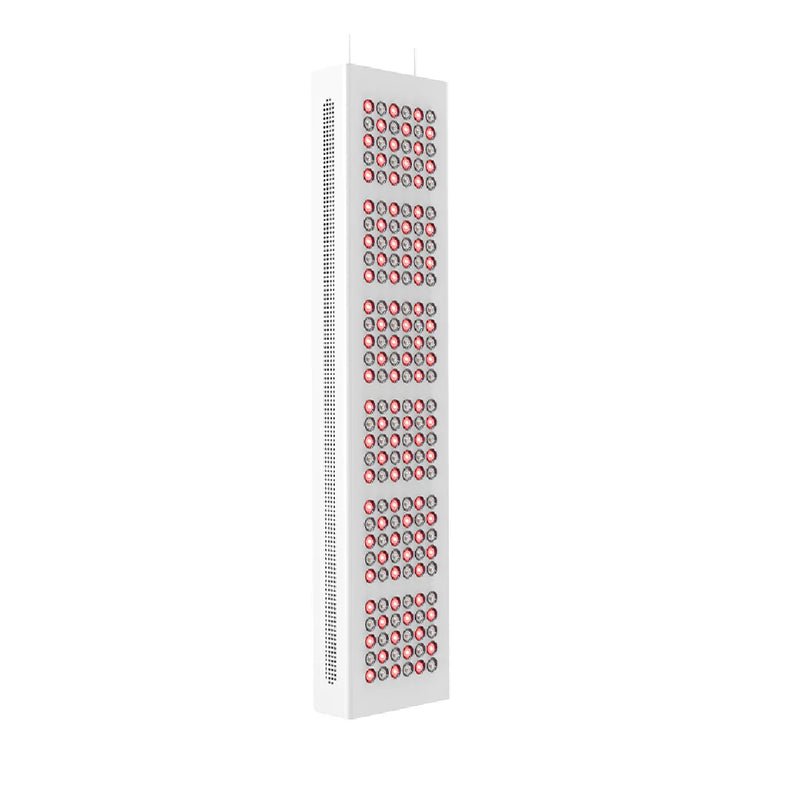
| Panel | Price | Best For | Form Factor |
|---|---|---|---|
| Health Smart (Large) | $5,999.00 | Full-body recovery | Large rigid panel |
| Health Smart (Medium) | $1,799.00 | Mid-size coverage | Medium rigid panel |
| Health Smart (Mini) | $699.00 | Targeted muscle repair | Small rigid panel |
| Thera Tri-Lite | $249.00 | Flexible, medical-grade pad | Wearable pad |
| Helio Spark | $499.00 | Skin and daily wellness | Compact panel |
Price
Health Smart Red Light Therapy Panel (Large): Best for Full-Body Recovery
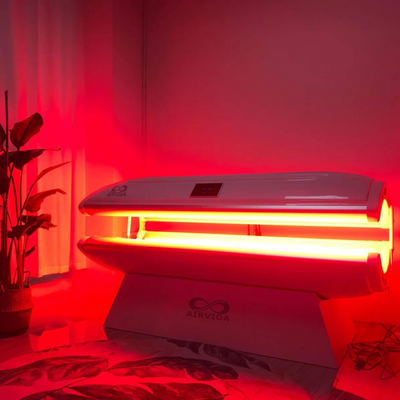
The largest panel in our lineup is designed for full-body coverage. Red and near-infrared light target skin, muscles, and joints together. At $5,999.00 it is a significant investment. See the full specs and purchase options.

Best for: athletes treating multiple muscle groups daily. Skip if: you have limited floor space or only need spot treatment.
Health Smart Red Light Therapy Panel (Medium): Best Mid-Size Option
A middle path for buyers who want broader coverage than a mini. It supports muscle recovery, circulation, and skin health. Compare the medium panel's details.

Best for: home gym owners treating torso and limbs. Skip if: you need full-body coverage in a single pass.
Health Smart Red Light Therapy Panel (Mini): Best for Targeted Muscle Repair
The $699.00 mini is the entry point. It is designed for targeted use on a smaller area, supporting muscle soreness and tissue repair. View the mini panel and buy options.

Best for: targeted post-workout soreness and small treatment areas. Skip if: you want whole-body sessions.
Thera Tri-Lite: Best Flexible, Medical-Grade Pad
The Tri-Lite is a flexible, lightweight pad with polychromatic LED lights spanning red and near-infrared wavelengths. It is USB-powered and priced at $249.00. Check the Tri-Lite's product details.
Best for: wrapping knees, shoulders, and joints during travel. Skip if: you want broad-area coverage.
Helio Spark: Best Compact Panel for Skin and Everyday Wellness
Six wavelengths, including 1064 nm for deeper sessions, in a compact body at $499.00. It suits buyers who want daily use for skin and general wellness. View the Helio Spark.
Best for: desk-side daily sessions and skin-focused routines. Skip if: you need high-output full-body treatment.
How to Build Red Light Therapy Recovery Protocols That Work
A recovery protocol is not a fixed recipe. It is a dose you adjust to your panel's output, the body area you treat, and how your tissue responds. The variables that matter are distance, duration, frequency, and timing relative to training. Get those four right and most home users can build a repeatable routine without overthinking it.
Start With Dose, Not Minutes
Dose is irradiance multiplied by time. A device rated at higher irradiance delivers more energy per session than one rated lower at the same distance and duration.
A general framework for recovery work:
Adjust for Panel Output and Body Area
Watch out: more time is not better. Overexposure can cause skin irritation, a temporary feeling of fatigue, and in some users a headache, so track dose and distance rather than chasing longer sessions. Stop and reassess if redness lasts more than a few hours.
Build a Weekly Rhythm Around Training
A common pattern is to treat the muscle groups stressed that day within a few hours of the workout, then leave at least one full day between sessions on the same area. Recovery is a cumulative process, so a modest session four times a week beats one long session followed by five days off. Keep a simple log of date, area, distance, and minutes; after three to four weeks you will have enough data to see what actually helps your soreness and sleep.
Know When to Ask a Clinician
Consult a healthcare professional before starting if you have a medical condition or are taking medication.
Why Medical-Grade Red Light Therapy Devices Cost More
Price gaps come down to output, build, and verification. Medical-grade devices publish irradiance figures, use higher-grade diodes, and often hold FDA clearances. The Tri-Lite's Class II listing is one example of documented review. Draft FDA guidance on photobiomodulation now emphasizes standardized non-clinical testing and labeling for home-use devices (Bestqool's analysis of FDA PBM guidance). That testing costs money, and it shows up in the price.
What the Evidence Says About Light Therapy and Recovery
Most red light therapy content lumps skin, hair, and recovery into one evidence pile. That is misleading. The quality of the research varies sharply by outcome, and a home user deciding whether a panel is worth $699.00 or $5,999.00 deserves to know which claims are well supported and which are still speculative. Here is how the evidence breaks down for the outcomes that matter in recovery.
Delayed-Onset Muscle Soreness
The most consistent recovery signal is for delayed-onset muscle soreness after unfamiliar or high-volume exercise. Several small randomized trials have reported lower soreness scores and better preserved strength in the days after exercise when red or near-infrared light was applied before or shortly after the session. The effects are modest and the studies are small, so the reasonable expectation is a reduction in soreness, not the elimination of it. A panel will not replace sleep, protein intake, or progressive loading.
Exercise Recovery and Performance
Research on performance recovery is more mixed. Some trials show faster return of strength and lower markers of muscle damage; others show no meaningful difference. A common pattern is that benefits appear when the light is applied to the specific muscle group that was trained, at a meaningful dose, within a few hours of exercise. Whole-body exposure with a weak panel is unlikely to reproduce those results. Treat faster recovery as a plausible benefit rather than a guarantee.
Pain and Joint Symptoms
For chronic pain and joint symptoms, the evidence is broader but not uniform. Reviews of photobiomodulation for knee osteoarthritis and chronic neck or low back pain generally find small to moderate improvements in pain scores compared with sham treatment, with the strongest results in studies that used adequate dose and repeated sessions. This is the area where a home panel is most often used for ongoing relief rather than post-workout recovery, and where consistency over weeks matters more than any single session.
What the Evidence Does Not Support
Claims that a panel detoxifies tissue, resets the nervous system, or replaces clinical treatment are not supported by controlled research. The skin and hair literature is real but separate: a multi-center, randomized, double-blind, sham-controlled study evaluated home-used LED and infrared masks for crow's feet (NCBI clinical study on LED masks), and a meta-analysis found meaningful hair density improvements with low-level light therapy at 16 to 24 weeks (Superpower's clinical evidence review). Those results do not transfer automatically to muscle recovery.
How to Read a Recovery Claim
When a brand cites research, check three things: whether the study measured a recovery outcome rather than a skin outcome, whether the device used was comparable in wavelength and irradiance to the one for sale, and whether the study was controlled and randomized. Most practitioner guidance lands in the same place: red light therapy is a low-risk adjunct to recovery, not a substitute for training load management, nutrition, and sleep. If you have a diagnosed injury or a condition that affects light sensitivity, get clinical advice before building a protocol around it.
Cost of Ownership and Value Over Time
A $5,999.00 panel looks expensive until you divide it. Used four times a week for three years, that is roughly $9.60 per session. Free shipping on orders over $200, no tax, and a 30-day return policy also apply.
Choosing Your Red Light Therapy Panel at Logic Health
Logic Health offers all five panels above with free shipping on orders over $200, no tax, and 24/7 customer support. Start with your treatment area and budget, then size up only if you need broader coverage.
Your recovery routine deserves equipment that matches your training. Logic Health carries red light therapy panels from the $249.00 Tri-Lite to the full-body Health Smart Large, with free shipping over $200, no tax, and a 30-day return policy. Get started with Logic Health and build a recovery setup that fits your space and goals.
Frequently Asked Questions
Do at-home red light therapy panels actually work for recovery?
Consistency matters more than any single session. Review the published specifications of any panel before you buy.
What features should I look for in medical-grade red light therapy devices?
Check the published specifications, including wavelength coverage in both red and near-infrared ranges and the warranty terms. A flexible, USB-powered pad like the Thera Tri-Lite is one option to compare.
How do I choose between a small panel and a full-body red light therapy system?
Match the panel to the area you treat most. The Health Smart Large costs $5,999.00 and the Mini costs $699.00. The large panel is designed for full-body coverage, while the mini is designed for targeted use on a smaller area.
How long should a red light therapy session last for muscle recovery?
Follow the instructions supplied with your panel for session length and distance, and consult a healthcare professional if you have questions.