






 (307) 441-5030
Quick Summary
You can prevent muscle soreness after lifting by warming up properly, ramping up training load gradually, and using active recovery such as light walking or easy cycling. Soreness usually comes from unfamiliar or intense exercise, so steady progression matters more than any single tool.
- Warm up for 5 to 10 minutes on light cardio before your first working sets.
- Add small amounts of weight each week rather than making big jumps.
- Use active recovery like light walking or easy cycling to ease stiffness the next day.
- Typical delayed-onset soreness peaks around day two and fades within three to five days.
- Static stretching has weak evidence for preventing soreness, so do not rely on it.
Table of Contents
- How to Prevent Muscle Soreness After Lifting
- What Causes Muscle Soreness After Lifting
- Step 1: Build a Proper Warm-Up Before Weightlifting
- Step 2: Ramp Up Training Load Gradually
- Step 3: Use Active Recovery for Sore Muscles
- Step 4: Choose Recovery Methods by Soreness Level
- Step 5: Decide Whether to Work Out While Sore
- How Long Muscle Soreness Lasts and When to Get Checked
- Building Your Post-Lifting Recovery Routine
- Frequently Asked Questions
How to Prevent Muscle Soreness After Lifting
Last Updated: November 1, 2026
What Causes Muscle Soreness After Lifting
Muscle soreness after lifting is usually caused by unfamiliar or intense exercise, not by lactic acid building up, so knowing the cause is the first step to help you prevent muscle soreness. Most people feel it 24 to 72 hours after a hard session, which is why it often shows up the day after you train. Understanding the cause makes it much easier to prevent. For more on the full set of steps, see proven steps to recover faster after workouts.
Evidence-based review of post-exercise recovery techniques, Frontiers in Physiology, 2018
Delayed-Onset Muscle Soreness (DOMS) Explained
Delayed-onset muscle soreness, or DOMS, is the ache you feel after training your muscles harder than they are used to. It tends to peak around day two and fade within a few days. Small amounts of muscle fiber damage and the inflammation that follows are the main drivers.
Knowing this helps you set realistic expectations. Soreness alone does not mean you did something wrong, and it does not mean you must stop training.
Step 1: Build a Proper Warm-Up Before Weightlifting
A good warm-up prepares your muscles for the load ahead. It raises your body temperature and gets blood flowing to the working muscles.
- Spend 5 to 10 minutes on light cardio, such as cycling or rowing
- Do a few sets of the first exercise with light weight
- Move through the full range of motion you will use in your session
A proper warm-up will not stop all soreness, but it makes your first working sets feel better and helps you train with better form.
Step 2: Ramp Up Training Load Gradually
The biggest cause of heavy soreness is a sudden jump in training. Your muscles adapt to the stress you give them, so increase weight, volume, or intensity slowly.
- Add small amounts of weight each week rather than big jumps
- Limit new exercises to a few sets at first
- Increase total sets across the week in small steps
Gradual progression builds strength and keeps soreness at a manageable level.
Step 3: Use Active Recovery for Sore Muscles
Active recovery means gentle movement that increases blood flow without adding stress. Light walking, easy cycling, or a relaxed swim can ease stiffness the day after a hard session.

A 2018 review found that active recovery, massage, compression garments, immersion, contrast-water therapy, and cryotherapy were all linked to reduced post-exercise soreness, with massage and cold exposure among the strongest options for inflammation (Evidence-based review of post-exercise recovery techniques, Frontiers in Physiology). Keep the effort low. Active recovery should feel easy, not exhausting.
Step 4: Choose Recovery Methods by Soreness Level
Not every sore day calls for the same response, and not every recovery method is backed by the same level of evidence. The most useful approach is to match the method to your soreness level and to know which tools have stronger support so you do not waste time or money on weak claims.
What the evidence actually supports
and found that active recovery, massage, compression garments, immersion, contrast-water therapy, and cryotherapy were all associated with reduced soreness, with massage and cold exposure showing some of the stronger signals for inflammation (Evidence-based review of post-exercise recovery techniques, Frontiers in Physiology). That does not mean every method works equally well for every lifter. A practical ranking looks like this:
VBX Medical Grade 8 piece Massage Gun →
- Weak evidence for soreness prevention: static stretching
- Uncertain or overstated claims: many supplements and recovery gadgets marketed for soreness have limited independent support, so treat bold claims with caution
Use that ranking to decide where to spend your recovery time and money.
Match the method to your soreness level
- Mild soreness (noticeable but not limiting): 10 to 15 minutes of easy walking or cycling, plus a gentle warm shower. This is usually enough to take the edge off stiffness.
- Moderate soreness (affects how you move but does not change your gait): add massage, either with a percussion tool or a foam roller, and keep the pressure comfortable rather than aggressive.
- Persistent soreness (lasts beyond the typical 3 to 5 days or keeps returning): combine rest and light movement, and review your training load rather than adding more recovery gadgets.
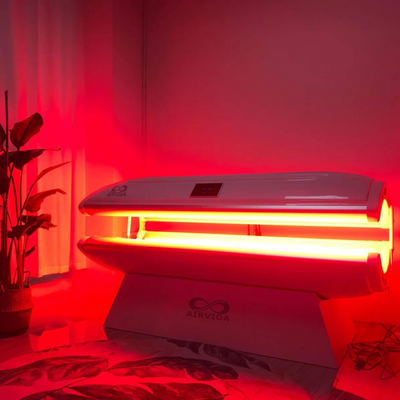
Start with the simplest option and add tools only when you need them. If you want a handheld option for massage, a massage gun for sore muscles fits the moderate soreness approach above. Compression boots are another option for leg soreness, though the evidence for compression is more moderate than for massage. A red light therapy recovery belt is one targeted tool some people use for moderate soreness. You can find more home-based recovery approaches for different soreness levels on home workout recovery methods.

A note on stretching and heat
Stretching can improve mobility, but do not rely on it to prevent or fix soreness. Heat, such as a warm shower or heating pad, can feel good and may help with stiffness. Use these methods for comfort and range of motion rather than as proven soreness cures.
Step 5: Decide Whether to Work Out While Sore
Mild soreness usually does not mean you must skip training. You can often train the same muscle group at lower intensity or train different muscles.
- Train at reduced weight or volume if soreness is mild
- Skip hard sets for a sore muscle group until it feels better
- Stop if pain is sharp, joint-focused, or gets worse during the session
Working out while sore is fine in moderation. Pushing through sharp pain is not.
How Long Muscle Soreness Lasts and When to Get Checked
Typical delayed-onset muscle soreness peaks around day two and usually fades within about three to five days. But the more useful question is not just how long soreness lasts, it is how to tell normal soreness from an injury and how to decide when you are ready to train again. Most recovery advice skips that decision guide, so here is a practical one.
DOMS versus injury: a side-by-side comparison
| Feature | Typical DOMS | Possible injury |
|---|---|---|
| Onset | 24 to 72 hours after training | Often sudden, during the session or immediately after |
| Feel | Achey, diffuse, spreads across the muscle | Sharp, localized, or pinpointed to a joint or tendon |
| Strength | Mild temporary weakness that improves daily | Clear weakness or inability to bear load |
| Swelling | Minimal or none | Visible swelling, bruising, or heat |
| Movement | Stiff but improves with gentle movement | Pain that worsens with movement or does not improve |
| Duration | Fades within about 3 to 5 days | Persists or worsens beyond a week |
If your symptoms line up with the right-hand column, or if you have numbness, dark urine, or severe swelling, get medical attention rather than training through it.
Measurable indicators that you are ready to train again
Rather than guessing, use a few simple checks:
- Range of motion: Can you reach the same depth or position as before the sore session? If you are noticeably short, give it another day of light movement.
- Performance: Can you complete a warm-up set at your usual weight with normal form and speed? A drop of more than a small amount suggests you are not recovered.
- Pain during movement: Does the soreness ease as you warm up, or does it sharpen? Soreness that eases is usually fine to train through at reduced intensity; pain that sharpens is a stop signal.
- Gait and posture: If soreness changes how you walk or stand, keep the session light and focus on recovery.
Adjust for training experience
- Beginners: Expect more soreness in the first few weeks as your muscles adapt. Keep sessions moderate and prioritize consistency over intensity.
- Returning lifters: Soreness often returns after a layoff. Start at roughly half your previous volume for the first week or two and rebuild gradually.
- Experienced trainees: Soreness should become less frequent as you adapt. If it keeps returning, look at recent jumps in volume, new exercises, or poor sleep rather than assuming it is normal.
A doctor can help you tell the difference between normal soreness and an injury.
Building Your Post-Lifting Recovery Routine
A simple routine works better than a complicated one. Here is a sample plan:
- Before lifting: 5 to 10 minute warm-up, then gradual progression
- After lifting: 10 to 15 minute cool-down with easy movement
- Next day: Light active recovery and massage if needed
- Ongoing: Track soreness levels and adjust training load
Consistency matters most. Small, steady habits prevent soreness far better than occasional big efforts.
Frequently Asked Questions
What causes DOMS?
Delayed-onset muscle soreness is generally attributed to microscopic damage to muscle fibers and the connective tissue around them, especially from unfamiliar or eccentric movements such as lowering a heavy weight slowly. Soreness usually peaks roughly 24 to 72 hours after the session and fades as the tissue repairs and adapts. It is a normal response to training, but it is not a sign that a workout was necessary to be effective.
Should I work out while sore?
Often yes, if the soreness is mild and does not change how you move. Light training that targets the same muscles at lower intensity can improve blood flow and range of motion. Stop and get checked if the pain is sharp, localized to a joint, causes swelling, or limits normal movement, since those can signal an injury rather than DOMS.
Does stretching after a workout prevent soreness?
Not reliably. Stretching can be useful for mobility and comfort, but it should not be your main strategy for preventing DOMS.
When is post-workout soreness a sign of an injury?
Soreness that is sharp, one-sided, located at a joint, accompanied by swelling or bruising, or still severe after several days should be evaluated by a clinician. Dark urine, marked weakness, or intense pain across large muscle groups are also reasons to seek medical care promptly.