






 (307) 441-5030
Quick Summary
An infrared sauna warms your body directly with panels that emit infrared radiation, at lower air temperatures than a traditional sauna. Both raise heart rate and make you sweat, and the strongest long-term evidence comes from traditional sauna use. Infrared-specific research is smaller and more preliminary.
- Traditional saunas heat the air to 160 to 195 degrees Fahrenheit.
- Infrared cabins run cooler and feel like a deep, steady warmth.
- Four to seven sessions per week were associated with 40% to 60% lower cardiovascular risk and death.
- One small study found symptom improvement in 13 of 15 heart failure patients.
- Drink water before and after sessions and avoid alcohol beforehand.
Table of Contents
- Infrared vs Traditional Sauna: How Each Heats Your Body
- What the Research Shows on Infrared Sauna Health Benefits
- Infrared vs Traditional Sauna for Cardiovascular Health
- How Long to Stay in a Sauna for Each Type
- Infrared Sauna Risks and Side Effects to Know
- Choosing Your Home Sauna: Next Steps with Logic Health
- Frequently Asked Questions
Infrared vs Traditional Sauna: How Each Heats Your Body
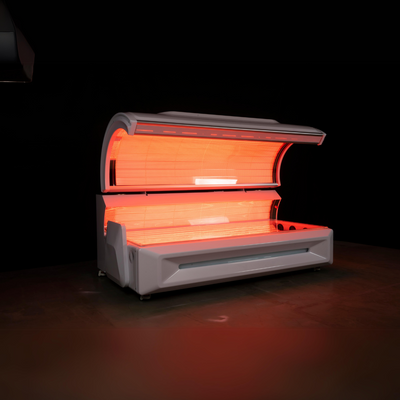
Infrared and traditional saunas both raise your body temperature, but they do it differently. A traditional sauna heats the air around you, usually to 160 to 195 degrees Fahrenheit, and your skin absorbs that heat. An infrared sauna uses panels that emit infrared radiation, which warms your body more directly at lower air temperatures. Mayo Clinic's overview of infrared saunas notes that infrared saunas produce results at lower temperatures than regular saunas.

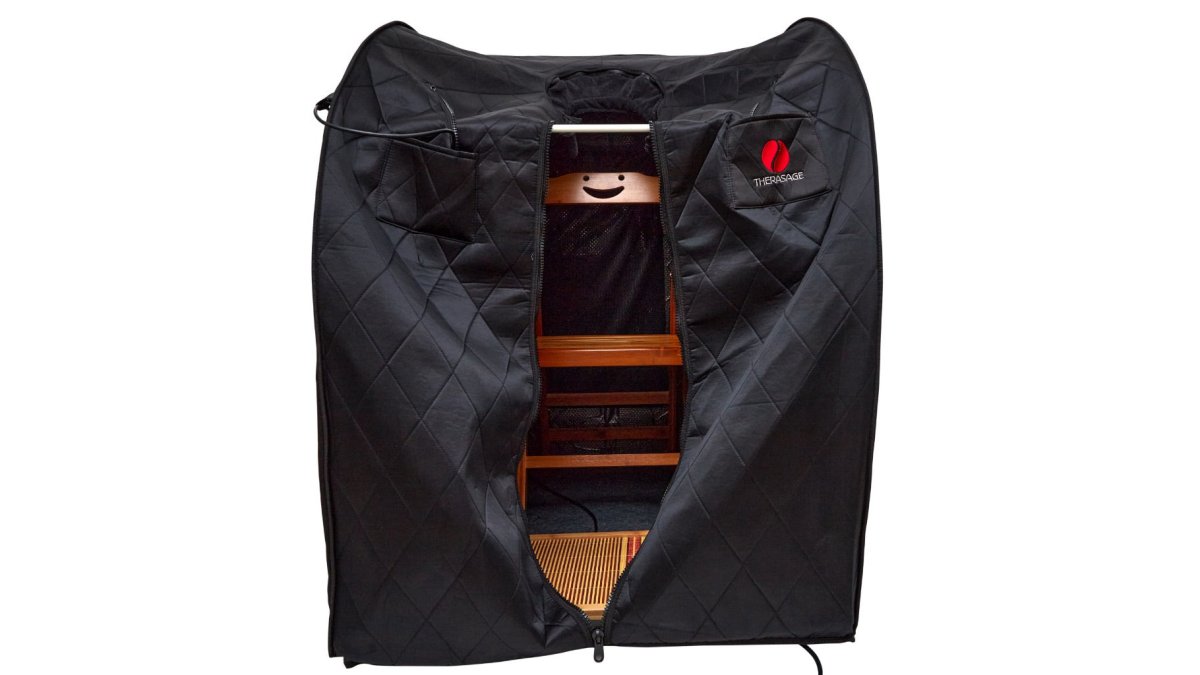
Air temperature and perceived heat
In a traditional sauna, the air itself is the heat source, so the room feels intensely hot the moment you sit down. Many people find that uncomfortable at first. Infrared cabins typically run cooler, and the heat feels more like a deep, steady warmth on the skin.
The practical difference is comfort. If you cannot tolerate high heat, an infrared cabin may be the easier starting point. Traditional saunas suit people who enjoy a hot, humid room and the steam that comes with it.
Core temperature, heart rate and sweating
Both types raise heart rate and make you sweat, which is the main reason people use them. Heat exposure increases circulation as your blood vessels widen.
Sweating is heavier in traditional saunas because the hot air drives it faster. Infrared sessions can still produce a strong sweat at lower temperatures, which is why many users find them easier to sit through for longer.
What the Research Shows on Infrared Sauna Health Benefits
The honest answer is that the evidence base for sauna health benefits is uneven, and it is not interchangeable between infrared and traditional saunas. Most of the strongest long-term data comes from traditional Finnish-style sauna studies, while infrared-specific research tends to be smaller, shorter, and more often focused on immediate physiological responses. Reading the literature with that split in mind prevents the common mistake of assuming a benefit proven for one type automatically applies to the other.
How to read the evidence
A useful way to grade what you find is by study design and outcome. Large prospective cohort studies that follow people for years carry more weight for long-term outcomes than small pre-post trials that measure a single session. Randomized controlled trials are stronger than observational associations, but they are rare in sauna research and usually small. Case series and mechanistic studies are useful for understanding how heat exposure affects the body, but they cannot establish that a sauna prevents disease.
Clinical Effects of Regular Dry Sauna Bathing: A Systematic Review is a reasonable starting point because it pools clinical effects across several studies of regular dry sauna bathing, including Finnish-style and infrared use. It gives a broader view than any single trial, but it does not rank infrared above traditional sauna, and the underlying studies vary in size and quality.
What is reasonably established
Across both types, the acute physiological response is well documented: heart rate rises, blood vessels widen, circulation increases, and sweating begins as the body works to shed heat. These are short-term effects, not proof of lasting health outcomes.
For longer-term outcomes, the strongest signal comes from observational research on frequent traditional sauna use. NPR's reporting on sauna research described an association between four to seven sessions per week and a 40% to 60% lower risk of cardiovascular disease and death. That is an association, not proof of cause, and the coverage does not separate infrared from traditional saunas. It is also worth noting that people who sauna frequently may differ in other health habits, which observational studies try to adjust for but cannot fully eliminate.
What is preliminary or infrared-specific
Infrared-specific research is more limited. One small study of patients with chronic heart failure found that symptoms improved in 13 of 15 patients (87%) after sauna treatment, as reported in Far-infrared saunas for treatment of cardiovascular risk factors. A study of 15 people cannot confirm a general benefit, and it does not tell you whether infrared outperforms traditional sauna for the same outcome. Similar small trials have looked at infrared sauna for blood pressure, chronic pain, and recovery, but the samples are typically small and the follow-up short.
What the research does not settle
Treat sauna use as a relaxation and recovery habit with plausible short-term benefits, not as a medical treatment, and be skeptical of any comparison that claims otherwise without citing large, type-specific trials.
Infrared vs Traditional Sauna for Cardiovascular Health
The cardiovascular case for saunas rests mainly on the heat-stress response. When you sit in a hot environment, your body redirects blood flow toward the skin to shed heat. Heart rate climbs, blood vessels widen, and cardiac output increases. Both infrared and traditional saunas produce that response, and current evidence does not show that infrared saunas give greater cardiovascular benefit than traditional ones.
What happens during a session
A common pattern is that heart rate rises into a range similar to moderate exercise, though the exact increase depends on temperature, session length, and individual fitness. Blood vessels in the skin dilate, which lowers blood pressure temporarily and increases circulation. Sweating begins as the body tries to cool itself, and core temperature rises modestly. These are short-term changes. They are the reason sauna use feels cardiovascular, but they are not the same as evidence for lasting heart-health outcomes.
What the long-term evidence suggests
The strongest long-term signal comes from observational studies of frequent traditional sauna use. NPR's reporting on sauna research described an association between four to seven sessions per week and a 40% to 60% lower risk of cardiovascular disease and death. That is an association, not proof of cause, and the research does not separate infrared from traditional saunas. It also does not establish a dose-response curve you can apply to infrared cabins, which typically run at lower air temperatures and may produce a different heat load over the same session length.
Infrared-specific cardiovascular research is thinner. One small study of patients with chronic heart failure found symptom improvement in 13 of 15 patients (87%) after sauna treatment, as reported in Far-infrared saunas for treatment of cardiovascular risk factors. A study of 15 people cannot confirm a general benefit, and it does not show infrared outperforms traditional sauna. Treat infrared cardiovascular claims as preliminary.
Practical safety for higher-risk groups
Sauna use is not risk-free, and the cardiovascular response is the reason. Anyone with heart disease, low blood pressure, uncontrolled high blood pressure, or other heart conditions should talk to a doctor before starting regular sessions, whichever type they choose. The same applies to people taking medications that affect heat tolerance or blood pressure, including diuretics, beta blockers, and some antidepressants. Pregnancy, older age, and conditions that impair sweating or kidney function also warrant a clinician's input.
Watch out: alcohol before a session raises the risk of dangerous overheating and should be avoided. Drink water before and after, keep sessions shorter when you are new, and stop if you feel dizzy, nauseous, or unusually weak. Because infrared cabins run cooler, it is easy to stay in longer than you would in a traditional sauna, and longer is not automatically better for cardiovascular safety.
The bottom line
Use sauna as a relaxation and recovery habit, not a substitute for exercise, blood pressure management, or medical care.
How Long to Stay in a Sauna for Each Type
Session length should match your tolerance. Because infrared cabins run cooler, people often stay in them longer than they would in a traditional sauna. Longer is not automatically better. Stop if you feel dizzy, nauseous or unusually weak.
The article notes that session length should match your tolerance, and that the two types feel different in practice.
| Factor | Infrared cabin | Traditional sauna |
|---|---|---|
| Typical air temperature | Lower, feels like deep warmth | 160 to 195 degrees Fahrenheit |
| How heat reaches you | Panels emit infrared radiation | Heated air around you |
| Comfort at start | Often easier to tolerate | Can feel intensely hot at first |
| Session length guidance | Match to tolerance; often stayed in longer | Match to tolerance; stop if dizzy or nauseous |
Infrared Sauna Risks and Side Effects to Know
Saunas carry real risks. Dehydration is the most common concern, so drink water before and after each session. Heat stress can affect pregnant people, children, older adults and anyone with cardiovascular or kidney conditions. Alcohol before a session raises the risk of dangerous overheating.
Mayo Clinic's guidance on infrared sauna use also notes that evidence for long-term health claims is limited, so treat sauna use as a relaxation habit rather than a medical treatment.
Choosing Your Home Sauna: Next Steps with Logic Health
If you are ready to compare options, Logic Health carries both hybrid and infrared models. The Rövia Aurora 3-Person Indoor Hybrid Sauna Room pairs infrared panels with a steam stove, priced at $6,499.97. Those who want room for more people can look at the Rövia Oasis 3-Person Indoor Hybrid Sauna Room, priced from $8,399.97. For a smaller footprint, the Thera360 Plus Portable Infrared Sauna is priced at $1,428.00.


Start with the type that matches how you like to heat up, then choose a size that fits your space and household. Browse the full range at Logic Health and find the setup that suits your routine.
Frequently Asked Questions
Which is healthier, infrared or traditional sauna?
Neither type has been shown in head-to-head trials to be clearly healthier. Traditional saunas heat the air to higher temperatures, often 170 to 200 degrees Fahrenheit, while infrared saunas warm the body directly at lower air temperatures, often around 120 to 150 degrees Fahrenheit. Your choice should depend on which heat you tolerate comfortably and which you will use consistently.
What is the downside to an infrared sauna?
The main downsides are a thinner evidence base than traditional sauna research, lower air temperatures that can feel less intense to some users, and the need for careful use by people with heart conditions, low blood pressure or who are pregnant. Staying hydrated and keeping sessions short at first reduces the risk of dizziness or overheating.
How long should you stay in an infrared or traditional sauna?
Stop if you feel dizzy, nauseous or unusually weak, and always drink water before and after. The right length depends on your health status and comfort.
Are the health benefits of infrared saunas supported by research?
Support is limited. A small study of 15 patients with chronic heart failure reported symptom improvement and a rise in ejection fraction from 30% to 34% after infrared sauna treatment, but the sample was too small to establish superiority over traditional sauna use. Mayo Clinic notes some evidence of possible benefit for long-lasting conditions, but more and larger trials are needed before strong claims can be made.