






 (307) 441-5030
Last Updated: November 7, 2026
Quick Summary
Active recovery is low-intensity movement, such as easy cycling, slow swimming, or a relaxed walk, done after hard training to help the body bounce back. It keeps blood flowing without adding much stress to tired muscles. Its advantage over passive rest is smaller than many coaches suggest.
- Active recovery means very low effort, with the ability to speak in full sentences.
- Most active recovery sessions work best between 20 and 45 minutes.
- Full rest may be better when you feel run down or have a sharp, localized ache.
- Track soreness, fatigue, sleep, and resting heart rate each morning to guide the choice.
- Sleep, nutrition, and hydration matter more than any single recovery session.
Table of Contents
- What Is Active Recovery and How Does It Differ From Rest?
- The Core Benefits of Active Recovery for Endurance Training
- Active Recovery Workout Examples by Sport
- How Long Should an Active Recovery Workout Last?
- Active Recovery Day Versus Full Rest: A Decision Framework
- Pairing Active Recovery With Sleep, Fueling, and Hydration
- Planning Your Next Easy Session This Week
- Frequently Asked Questions
What Is Active Recovery and How Does It Differ From Rest?
Active recovery is low-intensity movement done after hard training to help the body bounce back. Think easy cycling, slow swimming, or a relaxed walk.
Passive rest means no structured movement at all. Active recovery keeps the body moving at a very low effort. Light work is commonly described as keeping blood flowing without adding much stress to tired muscles.
The research is more mixed than many coaches admit. 2026 systematic review of physical recovery modalities in competitive and elite endurance athletes found that no physical recovery modality outperformed passive recovery across eight outcomes and 47 comparisons. That result does not mean active recovery is useless. It means the advantage is smaller than the marketing suggests.
The Core Benefits of Active Recovery for Endurance Training
Endurance athletes often train on back-to-back days. Gentle movement can help manage that load. Here are the main reasons athletes use it:
- Better circulation after hard sessions
- Less stiffness the morning after a long effort
- Easier movement on the next training day
- A routine that keeps you active without pushing your limits
- Mental reset after a tough week
You can also add gentle movement at home to support circulation between workouts. Our guide on how to improve circulation at home with seven daily steps lists simple habits that fit around a training plan.
Circulation, Soreness, and Metabolic Clearance
Light movement keeps blood moving through the legs. Many athletes report feeling less heavy the next day. Lactate clears fairly quickly on its own, so the benefit is best understood as comfort and movement rather than a dramatic cleanup.
Soreness works the same way. Easy effort may ease stiffness, but it will not erase the muscle damage from a hard race.
What the Research Actually Shows
Some research points in a helpful direction. 2019 study on active recovery and endurance adaptations reported that active recovery induced greater endurance adaptations, especially in maximal whole-body exercise. That is encouraging, but it is one study, and the research summary does not give a precise effect size.
The bigger picture is that recovery is a set of tools, not a single magic method. A 2022 review of recovery strategies listed hydration, nutrition, sleep, rest, stretching, and active recovery among the most common approaches athletes use.
Active Recovery Workout Examples by Sport
Endurance athletes need recovery sessions matched to the workout they are recovering from, because a session after a track interval day should look different from one after a four-hour ride or a race. The protocols below use conversational effort as the anchor: you should be able to speak in full sentences the entire time, and if you cannot, you are no longer recovering.

!Middle-aged runner cooling down with an easy jog on a park trail at sunrise
After interval or high-intensity sessions
- Running: 15 to 25 minutes of walk-jog, alternating 2 minutes easy jogging with 1 minute walking, on flat ground. Keep cadence relaxed and avoid hills.
- Cycling: 20 to 30 minutes on a flat route or trainer at low resistance, spinning a light gear at 80 to 90 rpm. The goal is leg turnover, not power.
- Swimming: 15 to 20 minutes of easy laps with a pull buoy or fins, resting 20 to 30 seconds at each wall. Skip hard kicking sets.
After long endurance sessions
- Running: 20 to 40 minutes of walking or very easy jogging, ideally on soft surfaces. Long runs leave connective tissue loaded, so walking is often the better choice than jogging.
- Cycling: 30 to 45 minutes of flat, low-resistance spinning. Avoid the urge to chase a segment or hold a target wattage.
- Swimming: 20 to 30 minutes of easy continuous laps at a stroke rate well below threshold, with frequent rest as needed.
After races
- Same day: 10 to 20 minutes of walking, plus gentle range-of-motion work. Do not jog the day of a marathon or long-course race; walking supports circulation without adding impact.
- Next day: 20 to 30 minutes of walking, easy spinning, or easy swimming, depending on what feels least irritating. Keep effort at a 2 to 3 out of 10.
Cross-training options
- Rowing: 15 to 25 minutes at a light stroke rate (18 to 22 strokes per minute) on a rowing machine. The RM1 Rowing Machine ($299.00) offers 32 levels of magnetic resistance. Keep the resistance low and the drive soft.
- Elliptical or incline walking: 20 to 30 minutes at a conversational pace, useful when running volume is already high.
Watch out: the most common mistake is turning a recovery session into a moderate workout. If your breathing is audible or you are chasing pace, power, or heart-rate targets, you have crossed out of recovery and into training stress. Use a heart rate monitor only as a ceiling, not a target, and stay well below your hard-effort zone.

The sport-specific protocols below are the easiest way to see how recovery sessions change after different types of training.
| Situation | Sport | Duration and effort |
|---|---|---|
| After interval sessions | Running | 15 to 25 min walk-jog, flat ground |
| After interval sessions | Cycling | 20 to 30 min, 80 to 90 rpm, low resistance |
| After interval sessions | Swimming | 15 to 20 min easy laps with pull buoy or fins |
| After long endurance sessions | Running | 20 to 40 min walking or very easy jogging |
| After long endurance sessions | Cycling | 30 to 45 min flat, low-resistance spinning |
| After long endurance sessions | Swimming | 20 to 30 min easy continuous laps |
| After races | Same day | 10 to 20 min walking, gentle range-of-motion work |
| After races | Next day | 20 to 30 min walking, easy spinning or swimming |
How Long Should an Active Recovery Workout Last?
Most sessions work best between 20 and 45 minutes. Shorter sessions still help with circulation. Longer sessions can add fatigue if you are already tired.
As a rule, keep the session short enough that you finish feeling better than when you started. If your legs feel worse at the end, you went too hard.
Active Recovery Day Versus Full Rest: A Decision Framework
Active recovery is not automatically better than rest. The useful question is which one fits your current state, and the answer changes day to day. A practical framework uses four inputs: how your legs feel, how your energy and sleep have been, whether anything hurts in a way that is sharp or localized, and how heavy your recent training load has been.
Choose active recovery when
- Your legs feel stiff or heavy but your energy is normal.
- You slept reasonably and your resting heart rate is near your usual baseline.
- Soreness is diffuse and symmetrical (both quads, both calves) rather than sharp or one-sided.
- You are in a normal training block without a race in the next 48 hours.
Choose full rest when
- You feel run down, have a resting heart rate noticeably above your baseline, or slept poorly for two or more nights.
- You have a sharp, localized, or worsening ache, or pain that changes your gait.
- You are ill, feverish, or recovering from a race or an unusually high training load.
- Your next key session is within 24 hours and you are not confident easy movement will leave you fresher.
How to monitor the decision
Track four simple markers each morning: perceived soreness (1 to 10), perceived fatigue (1 to 10), sleep quality, and resting heart rate. A common pattern is that soreness stays high while fatigue and heart rate return to baseline, which usually supports an easy session. When fatigue and heart rate are both elevated, rest tends to be the better call. You can also use next-session performance as a check: if easy movement consistently leaves you flatter the following day, your recovery sessions are too hard or too long.
The trade-off
Active recovery can support circulation and reduce stiffness, but it also adds training load. Full rest removes that load entirely. Neither is universally superior, and the research on recovery modalities is more mixed than marketing suggests. Treat the framework as a starting point and adjust based on how you respond over two to three weeks.
Some recovery tools can add comfort on rest days. The Echelon Professional-Grade Compression Boots ($599.99) are one option for athletes who want leg relief between sessions.

Pairing Active Recovery With Sleep, Fueling, and Hydration
Active recovery works best alongside basics. Sleep, enough food, and water matter more than any single session. A light walk will not fix poor sleep.
Our article on recovering from workouts at home effectively explains how to build a routine around these basics.
Eat a balanced meal with protein and carbohydrates after hard sessions. Drink water through the day, not just after exercise.
Planning Your Next Easy Session This Week
Start with one easy session after your hardest workout. Keep it under 30 minutes and aim for a conversational pace. Track how your legs feel the next morning.
If you want a step-by-step plan for faster recovery, read our guide on how to recover faster after workouts. It lays out seven proven steps you can fit into a busy week.
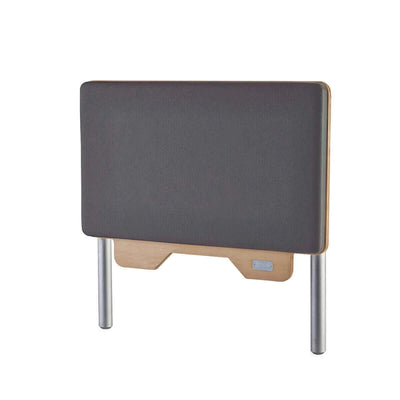
Logic Health offers equipment for low-impact movement between sessions. Browse the Stride DuoPad Recovery Treadmill ($399.99) for low-impact walking on rest days. Free shipping applies on orders over $200, and the 30-day return policy applies to orders.
Recovery is personal. Start with easy movement, watch how your body responds, and adjust from there. When you are ready to build a home recovery routine, shop the Logic Health collection and find tools that fit your training.
Frequently Asked Questions
What are the benefits of active recovery for athletes?
Active recovery uses low-intensity movement such as easy cycling, walking, or swimming to keep blood moving through the legs after hard training. Supporters credit it with easing muscle soreness and stiffness and helping athletes feel ready for the next session. Recent evidence is more cautious. A 2026 systematic review and network meta-analysis found that across eight outcomes and 47 comparisons, no physical recovery modality outperformed passive recovery in competitive or elite endurance athletes. The practical takeaway: active recovery is a low-cost, low-risk option, and it works best when it helps you stay consistent.
How long should an active recovery workout last?
Most endurance athletes keep an active recovery session between 20 and 45 minutes at a conversational effort, roughly where you could speak in full sentences. Shorter sessions suit days after a race or a very hard interval workout, while longer easy sessions can suit a recovery week. Keep heart rate low and effort easy enough that you finish feeling better than when you started. If you are still sore or fatigued after the session, shorten the next one or take a full rest day instead.
What is active recovery, and how is it different from a rest day?
Active recovery is light, deliberately easy exercise done after training or on an off day, such as a slow bike ride, a walk, or a relaxed swim. A rest day involves no structured movement beyond daily activity. Both aim to support training load recovery, but active recovery keeps you moving and may suit athletes who feel stiff or restless when they stop completely. The two are not interchangeable in every situation, so choose based on how fatigued you feel and how hard your last session was.
When should endurance athletes choose complete rest instead?
Choose complete rest when you feel unusually fatigued, have pain beyond normal muscle soreness, are sick, or are recovering from a race that left you severely depleted. Rest is also the better choice when a planned easy session would push you above conversational effort. If an easy movement session leaves you more tired, drop it and rest. Logic Health's Stride DuoPad Recovery Treadmill, priced at $399.99, is designed for low-impact walking on days when you want gentle movement.