






 (307) 441-5030
Table of Contents
- How to Improve Circulation at Home: Start With Movement
- What You'll Need Before You Start
- Step 1: Build a Daily Walking Routine
- Step 2: Do Exercises to Improve Blood Circulation in Legs
- Step 3: Learn How to Improve Circulation in Hands and Feet
- Step 4: Add Foods and Drinks for Blood Circulation
- Step 5: Use At-Home Tools for Legs and Feet
- Signs of Poor Circulation You Should Not Ignore
- Common Mistakes and Safety Notes
- Frequently Asked Questions
Last Updated: October 7, 2026
How to Improve Circulation at Home: Start With Movement
Poor circulation rarely announces itself. The early signs are quiet: cold fingers, tired legs, feet that fall asleep during meetings.
At Logic Health, we work with athletes, desk-bound professionals, and people managing chronic stiffness.
Below, we break down seven daily steps, plus the warning signs that mean you should see a doctor.
What You'll Need Before You Start
You do not need a gym. You need a few basics and a realistic schedule.
- Comfortable shoes for walking
- A chair with a firm seat for seated exercises
- A water bottle within arm's reach
Step 1: Build a Daily Walking Routine
A daily walk is the single most effective habit for blood flow. Walking works the calf muscles, which act as a pump that pushes blood back up toward your heart.
- Walk at a pace where you can talk but not sing
- Swing your arms to boost upper-body circulation
- Take the stairs when you can
The American Heart Association physical activity guidelines recommend at least 150 minutes of moderate activity per week. A 30-minute walk five days a week gets you there.
Step 2: Do Exercises to Improve Blood Circulation in Legs
Exercises to improve blood circulation in legs target the calf muscles, ankles, and thighs, the muscles that push blood back to your heart against gravity.
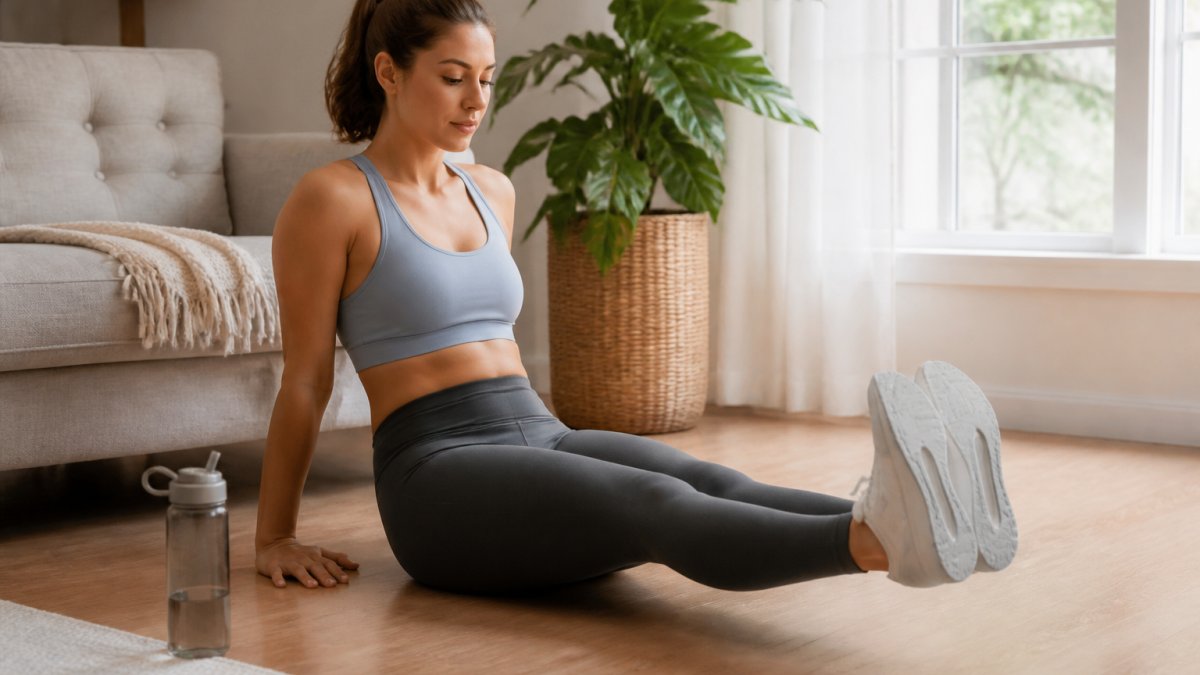
Try this five-move set. Do two rounds, resting 30 seconds between moves.
- Calf raises - rise onto your toes, lower slowly. 15 reps.
- Ankle pumps - point and flex your feet while seated. 20 reps.
- Knee lifts - march in place, lifting each knee to hip height. 20 reps.
- Squats - sit back like you're lowering into a chair. 10 reps.
- Lunges - step forward, bend both knees, return. 8 per leg.
Step 3: Learn How to Improve Circulation in Hands and Feet
Most guides lump hands and feet together and stop at "wiggle your fingers and toes." That misses the point. Hands and feet are the body's farthest outposts from the heart, so they are the first places to feel cold, numb, or slow to warm, and where the difference between a harmless chill and something worth a doctor's visit matters most.
Why hands and feet get cold first
Blood vessels near the skin narrow in response to cold, stress, or low activity. That narrowing (vasoconstriction) shunts blood toward your core to protect your organs, so your fingers and toes get less flow. Movement reverses this: it pumps blood through the small vessels, and the friction of muscle work generates heat.
Hand and finger routine (about 3 minutes)
Do this seated, with your hands at heart level or slightly below.
- Fist clench and release, open and close your fists 20 times, squeezing firmly but not painfully.
- Finger spread, spread all five fingers wide, hold for 3 seconds, relax. Repeat 10 times.
- Wrist circles, roll each wrist slowly in 10 circles each direction.
- Thumb-to-finger taps, touch your thumb to each fingertip in sequence, both hands, 3 rounds.
- Stress ball squeeze, squeeze a soft ball for 5 seconds, release, 10 reps per hand.
Foot and ankle routine (about 4 minutes)
- Ankle pumps, point your toes down, then flex them up toward your shin. 20 reps per foot. This is the single most effective move for lower-leg flow because it engages the calf pump.
- Ankle circles, rotate each ankle 10 times in each direction.
- Toe curls, scrunch a towel or small cloth with your toes, hold, release. 10 reps per foot.
- Tennis ball roll, roll the arch of each foot over a tennis ball for 60 seconds. This massages the plantar surface and warms the tissue.
- Heel-to-toe rocks, shift weight slowly from heel to toe and back, 15 reps per foot, holding a counter for balance.
Warm water soaks: helpful, with one caveat
A warm, not hot, soak for 5 to 10 minutes can warm cold hands or feet. The caveat: if you have diabetes or nerve damage in your feet, you may not feel heat accurately and can burn yourself. Check the water with your elbow or a thermometer, not your foot.
When cold hands or feet are not just cold
Home remedies are the right first step for hands and feet that feel cold after sitting, but not for every symptom. Talk to a clinician if you notice:
- Persistent numbness or tingling that does not go away when you warm up or move.
- Color changes, fingers or toes turning white, blue, or unusually red, especially in response to cold or stress.
- One-sided symptoms, coldness, swelling, or color change in one hand or foot but not the other.
These are not diagnoses, they are reasons to get evaluated rather than keep experimenting at home. A clinician can sort out whether the cause is circulation, nerve function, thyroid activity, or something else.
What to expect
Most people who add a short hand and foot routine notice warmer extremities within one to two weeks. If nothing changes after consistent effort, or symptoms are one-sided or worsening, get it checked.
Step 4: Add Foods and Drinks for Blood Circulation
Foods and drinks for blood circulation support the system from the inside. No single food fixes poor flow, but a steady pattern helps your blood vessels stay flexible.
What to add:
- Water - dehydration thickens blood and slows flow. Drink throughout the day.
- Beets and leafy greens - these contain nitrates, which your body converts to nitric oxide. Nitric oxide relaxes blood vessels.
- Berries and citrus - rich in vitamin C and antioxidants
What to cut back on:
- Excess salt, which raises blood pressure
- Heavy alcohol, which affects vessel function
- Too much caffeine if it makes you jittery
Step 5: Use At-Home Tools for Legs and Feet
At-home tools can fill the gaps your movement routine leaves behind, the long flight, the eight-hour desk day, the evening when your legs feel heavy. But tools are not neutral: some help almost everyone, some help specific situations, and some are unsafe for certain people. Here is what each tool does, who should be cautious, and how to tell whether it is working.
What these tools are actually doing
Most leg and foot circulation tools work on one principle: they support or mimic the calf muscle pump. Your calf muscles squeeze the deep veins in your lower leg when you walk, pushing blood upward against gravity; when you sit still for hours, that pump stops. Compression garments and powered devices apply external pressure in a graded or pulsing pattern to do part of that job for you.
Compression socks and stockings
What they do: Apply graduated pressure, firmest at the ankle, lighter higher up, to support upward flow and reduce swelling during long sitting or standing.
Best for: Travel, desk work, long shifts on your feet, mild swelling after activity.
MERACH Under Desk Elliptical Leg Exerciser →
What to know:
- Over-the-counter compression is usually mild (often described as 15-20 mmHg). Higher pressures require a prescription and proper fitting.
- Wear them during the day. Do not sleep in them unless a clinician tells you to.
- Stop if you get numbness, tingling, skin irritation, or increased pain. A sock that is too tight is not working better, it is restricting flow.
Powered compression devices (boots and sleeves)
What they do: Inflate and deflate in cycles to mimic the calf pump, often with adjustable zones and pressure levels.
Best for: Post-workout recovery, end-of-day leg heaviness, people who cannot walk but want to support lower-leg flow.
What to know:
- Session length and pressure vary by device. Follow the manufacturer's guidance rather than pushing to the highest setting.
- They are a comfort and recovery tool, not a treatment for a diagnosed vascular condition.
- The same cautions that apply to compression socks apply here: check with a clinician first if you have artery disease, a clot history, or heart failure.
Under-desk movement devices
What they do: Pedals, ellipticals, or compact steppers that keep your legs moving while you sit.
Best for: Desk workers, people with limited mobility, anyone who sits for long stretches.
What to know:
- The benefit comes from the movement itself, not the device. A pedal you use for 10 minutes beats one that sits in a corner.
- Start with low resistance and short sessions. Pedaling hard while seated for the first time can leave your knees sore.
- These are not a replacement for standing and walking. Think of them as a bridge between movement breaks.
Walking pads and treadmills
What they do: Let you accumulate walking minutes indoors, regardless of weather or schedule.
Best for: Daily step goals, low-impact walking, people who work from home.
What to know:
- Walking speed matters less than total minutes. A slow, steady pace you will actually repeat beats a fast pace you dread.
- If you use a walking pad at a desk, keep the speed low enough that you can type and read comfortably. Distracted walking on a moving belt is a fall risk.
- Hold a rail or keep a clear path if you are new to walking pads or have balance concerns.
How to tell if a tool is helping
Give any tool two to three weeks of consistent use before judging it. Signs it is working:
- Legs feel less heavy at the end of the day
- Less swelling in the ankles and feet
- Warmer feet in the evening
Signs to stop and reassess:
- New or worsening pain
- Numbness, tingling, or skin changes
- Swelling in one leg only
A realistic way to choose
If you sit for work, an under-desk movement device plus a daily walk covers most of the gap. If you travel or stand for long shifts, compression socks are the simplest addition. If you want recovery support after activity, powered compression is reasonable. You do not need all of them, buying more tools does not improve circulation more than using one consistently.
Signs of Poor Circulation You Should Not Ignore
Signs of poor circulation are easy to dismiss as "just being cold" or "just getting older." Some are harmless. Others need a doctor's attention.
See a doctor soon if you notice:
- Swelling in one leg only
- Skin that looks shiny, tight, or changes color
- Sores or wounds on your feet that won't heal
Get urgent care if you have:
- Sudden severe pain, swelling, or warmth in one leg
- Chest pain or shortness of breath
- Sudden weakness or loss of feeling in a limb
These can signal a clot or a heart problem. Do not wait to see if they pass.
Common Mistakes and Safety Notes
The biggest mistake is doing too much too fast. A daily walk beats an intense session you never repeat, so build slowly. The second is skipping the boring parts: water, sleep, and standing up every hour do more than most people expect.
Safety notes:
- Warm up for two minutes before any exercise
- Stop if you feel dizzy, short of breath, or have chest pain
- Don't use compression gear if you have severe artery disease without asking your doctor
Frequently Asked Questions
What should I drink to improve blood circulation at home?
Water is the simplest choice. Staying hydrated helps keep blood volume steady, which supports blood flow to your hands, feet, and legs. Unsweetened tea, beet juice, and citrus drinks are also commonly recommended because they contain compounds that support heart health. Aim for consistent water intake throughout the day rather than large amounts at once, and limit sugary sodas and excess alcohol, which can work against circulation.
Which exercises help most with blood circulation in the legs?
Calf raises, ankle pumps, knee lifts, and seated leg extensions are among the most effective because they activate the calf muscles, which act as a pump for blood returning to the heart. A 20 to 30 minute daily walk adds whole-body benefit. If you sit for long stretches, set a timer to stand and move every hour. Even two minutes of ankle pumps under a desk can make a noticeable difference by the end of the day.
When should I see a doctor about poor circulation?
See a doctor if you notice persistent numbness, cold hands or feet that do not warm up, swelling that does not go down with elevation, or skin color changes. Seek urgent care for sudden severe pain, a wound on the foot or leg that will not heal, or one-sided swelling with warmth, which can signal a clot. Home remedies support everyday circulation, but they are not a substitute for medical evaluation of ongoing symptoms.
Are compression socks or at-home devices worth using?
Compression socks and devices that mimic the muscle pump, such as compression boots or under-desk leg exercisers, can help reduce swelling and stiffness, especially if you sit or stand for long periods. They work best alongside walking and stretching, not instead of them. Check with your doctor first if you have arterial disease, nerve damage, or a history of clots, since some compression tools are not safe for everyone.