






 (307) 441-5030
Table of Contents
- How to Maintain a Home Sauna: A Step-by-Step Routine
- Sauna Maintenance Checklist: Daily, Weekly, and Monthly Tasks
- How to Clean Sauna Wood Without Damaging It
- Sauna Heater Maintenance: What to Check and When
- Preventing Mold in a Sauna: Ventilation and Drying
- Sauna Type Differences: Traditional, Infrared, and Outdoor
- When to Call a Professional and What Maintenance Costs
- Frequently Asked Questions
Last Updated: October 5, 2026
How to Maintain a Home Sauna: A Step-by-Step Routine
Learning how to maintain home sauna equipment starts with one habit: dry it out after every session. Moisture is the enemy. Wood, heaters, and controls all last longer when the room returns to dry, ventilated conditions within a few hours of use.
Below, we'll walk through a simple routine you can follow in under ten minutes a week, plus the deeper tasks that keep a home sauna running for decades.
Sauna Maintenance Checklist: Daily, Weekly, and Monthly Tasks
A sauna maintenance checklist keeps you from guessing what needs attention. Use this schedule as your baseline.
| Task | Frequency | Time Needed |
|---|---|---|
| Wipe benches and backrests with a towel | After every session | 2 minutes |
| Leave door and vents open to dry | After every session | Passive |
| Sweep or vacuum the floor | Weekly | 3 minutes |
| Inspect wood for stains or cracks | Weekly | 2 minutes |
| Deep clean benches and walls | Monthly | 20 minutes |
| Check heater and stones | Monthly | 5 minutes |
| Inspect ventilation and seals | Quarterly | 10 minutes |
After Every Session
- Lay a towel on the bench before you sit down
- Wipe sweat off the wood with a dry cloth once you're done
- Leave the door open and vents clear for at least 30 minutes
- Turn off the heater and let stones cool naturally
Weekly and Monthly Tasks
Each week, sweep or vacuum the floor to clear dust, hair, and dead skin cells. Each month, do a light scrub of the benches with a damp cloth and a sauna-safe cleaner, then let everything dry fully before closing up.
How to Clean Sauna Wood Without Damaging It
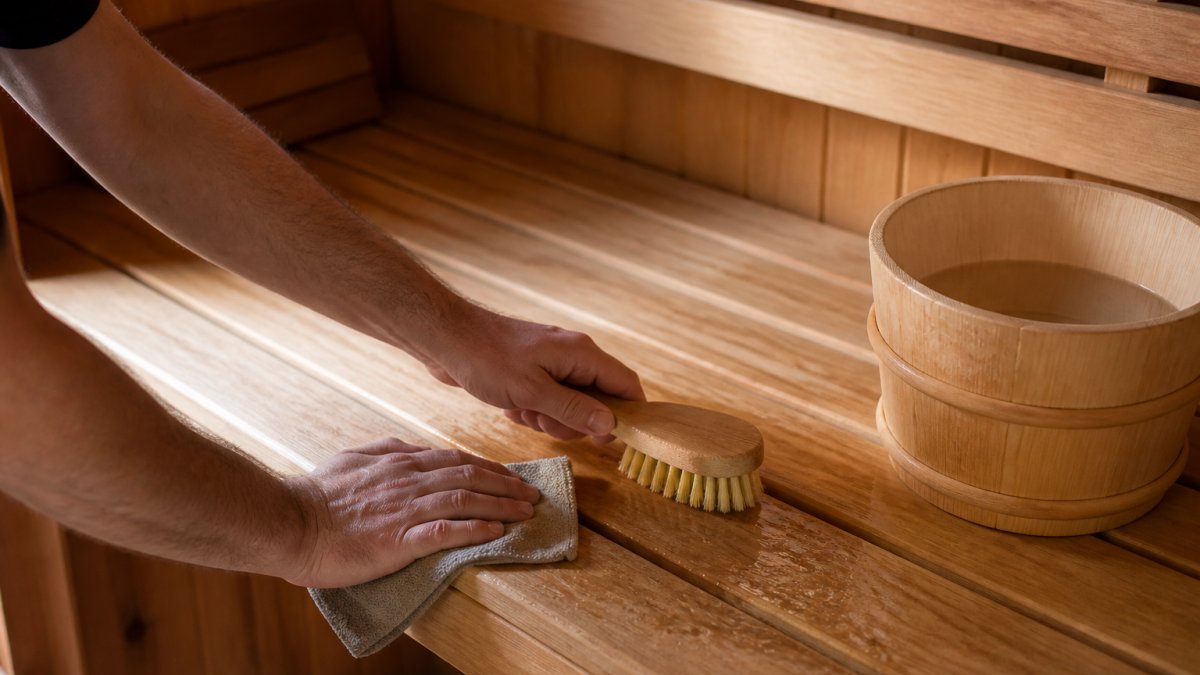
Learning how to clean sauna wood comes down to three rules: mild soap, warm water, and a soft-bristle brush. Harsh chemicals strip the wood's natural oils and leave a finish that cracks under heat.
Safe Cleaners and Tools
Stick to these items for routine cleaning:
- Mild soap diluted in warm water
- A soft-bristle brush or microfiber cloth
- A bucket of filtered or soft water
- A dry towel for the final wipe
Avoid bleach, ammonia, and any all-purpose spray cleaner. They dry out cedar and other sauna woods.
Treating Stains and Sweat Marks
For light sweat marks, a damp cloth with mild soap usually does the job. For deeper stains, scrub gently with the grain, then rinse with a clean damp cloth. Never soak the wood. If a stain won't lift after two attempts, it's time to call a professional rather than risk sanding damage.
Sauna Heater Maintenance: What to Check and When
Sauna heater maintenance protects both the unit and your home. The heater is the one component where a small ignored problem becomes a fire or electrical hazard, so it deserves more than a quick glance.
Monthly Heater Routine
- Turn off power at the breaker before touching the heater. Confirm with a non-contact voltage tester if you have one.
- Remove and inspect stones for cracks, crumbling, or dust buildup.
- Vacuum dust from around the heater base and from the stone compartment.
- Check the power cord and connections for wear, corrosion, or discoloration.
- Replace any cracked stones before the next session.
- Confirm the heater is mounted securely and has the required clearance from walls and benches.
How Often to Replace Sauna Stones
Stones do not last forever. Heat cycling causes them to crack, and cracked stones reduce heat transfer and can damage the heater. Most owners replace stones every one to two years, with heavy use shortening that interval. Replace any stone that is cracked, crumbling, or producing dust when handled.
What to Watch For Between Checks
- Burning smell: Stop using the sauna immediately. This usually means dust on the elements or a failing connection.
- Tripped breaker: Do not reset and continue. A breaker that trips when the heater cycles on indicates a fault that needs an electrician.
- Uneven heat: Often a sign of cracked stones or a failing element.
- Discolored cord or plug: Heat damage at the connection point is a fire risk.
Electrical Safety
Sauna heaters draw significant current and are usually on a dedicated circuit. Do not modify the circuit, replace the breaker with a larger one, or extend the cord. If you notice any burning smell or tripped breaker, stop using the sauna and call a licensed electrician. For electrical safety guidance on sauna installations, the U.S. Consumer Product Safety Commission publishes home safety resources worth reviewing.
Infrared Panel Care
Infrared cabins have no stones, but the panels still need attention. Wipe panels with a dry or barely damp microfiber cloth. Never spray liquid directly onto a panel. Dust the control panel monthly and keep the cabin dry. If a panel stops heating evenly, stop using the unit and contact the manufacturer or a qualified technician.
Preventing Mold in a Sauna: Ventilation and Drying
Preventing mold in a sauna is mostly about air circulation. Mold needs moisture and stillness. Remove either one and it can't grow.
After every session:
25 Filter Bags for Home Pro & 1.0 Chillers →
- Leave the door cracked open for at least 30 minutes
- Open any vents or windows in the sauna room
- Run a small fan if the room has no cross-ventilation
- Wipe down any standing water on the floor
If you spot early mildew, clean it immediately with mild soap and a soft brush, then dry the area completely. For indoor saunas in humid climates, a dehumidifier in the surrounding room helps more than most owners expect.
Sauna Type Differences: Traditional, Infrared, and Outdoor
Most maintenance guides treat every sauna the same. That is a mistake. The heater, the materials, and the exposure to weather all change what you clean, how often, and what you must never do. Below is task-level guidance for the three types most owners have.
Traditional Saunas
A traditional sauna uses a heater that warms stones, and you pour water on those stones to create steam. That means two things drive maintenance: heat cycling of the wood, and moisture from the steam.
- Benches and walls: Heat pulls oils and resin to the surface of cedar, spruce, and pine. Wipe with a damp cloth after every session, and do a monthly mild-soap scrub with the grain. Never soak the wood; standing water is what causes cracking and mold.
- Stones: Inspect monthly. Stones crack, crumble, and lose their ability to hold heat. Most owners replace them every one to two years, more often with heavy use. Replace cracked stones before the next session so the heater does not overheat.
- Heater and elements: Turn off power at the breaker before touching anything. Vacuum dust from the heater base monthly. Elements and connections should be checked by a licensed electrician if you see corrosion or a tripped breaker.
- Floor and drain: If your sauna has a floor drain, flush it monthly with warm water to prevent buildup. Without a drain, wipe standing water immediately.
Infrared Saunas
Infrared cabins use panels that emit radiant heat at lower temperatures than a traditional heater. There are no stones and no steam, so the maintenance profile is different.
- Panels: Wipe with a dry or barely damp microfiber cloth. Never spray liquid directly onto a panel or saturate it. Moisture inside a panel is an electrical hazard and usually not covered by warranty.
- Benches and interior wood: Lower heat means less resin movement, but sweat still lands on the wood. Wipe after every session and do a light monthly scrub.
- Controls and electronics: Dust the control panel and any exposed wiring area monthly. Keep the cabin dry; infrared units are more sensitive to ambient humidity than traditional saunas.
- No stones to replace: This removes the most common recurring maintenance task, but it does not remove the need for monthly inspection of cords, plugs, and panel mounting.
Outdoor Saunas
An outdoor sauna adds weather to everything above. The heater and wood care rules still apply, but exposure drives a separate checklist.
- Exterior wood: Inspect the finish each season. UV and rain break down stains and sealers, and untreated wood will gray and crack. Reapply a sauna-safe exterior finish when water stops beading on the surface.
- Roof and seals: Check the roof, door seals, and window gaskets yearly. A small leak above the heater is both a fire and electrical risk.
- Heater housing: Weatherproof housings still collect moisture. Inspect the housing and connections after heavy rain or snowmelt.
- Ventilation: Outdoor cabins often rely on passive vents. Confirm they are clear of debris, snow, and insect nests before each season.
Quick Comparison
| Task | Traditional | Infrared | Outdoor |
|---|---|---|---|
| Wipe benches after session | Yes | Yes | Yes |
| Monthly mild-soap scrub | Yes | Yes | Yes |
| Replace stones | Every 1-2 years | Not applicable | Every 1-2 years |
| Wipe panels | Not applicable | Yes, dry only | Not applicable |
| Inspect exterior finish | Not applicable | Not applicable | Seasonally |
| Check roof and seals | Not applicable | Not applicable | Yearly |
When to Call a Professional and What Maintenance Costs
Most routine sauna care is a DIY job. Call a professional when you see structural cracks, persistent mold, electrical issues, or heater failure.
Signs it's time to call someone:
- Mold that returns after two cleanings
- Cracks wider than a credit card in benches or walls
- Any burning smell, sparking, or tripped breakers
- Heater that won't reach temperature
- Water damage around the door or floor
Typical service calls cover electrical work, heater replacement, or wood restoration. For health and safety context on heat exposure, the CDC guidance on extreme heat offers useful background.
For owners who want to keep their sauna in top shape without guesswork, Logic Health carries a range of wellness equipment built for long-term home use.
Frequently Asked Questions
How often should you clean a home sauna?
Wipe benches and backrests after every session to remove sweat and dead skin cells. Sweep or vacuum the floor weekly. Do a deeper clean with a sauna-safe cleaner once a month. If you use your home sauna daily, increase deep cleaning to every two weeks. Regular cleaning prevents stains from setting and keeps wood surfaces in good condition.
Can bacteria grow in a sauna?
Yes. The heat of a sauna session does not sterilize surfaces. Sweat, dead skin cells, and moisture create conditions where bacteria and mold can grow, especially on benches and in crevices. Letting the sauna dry out between uses and wiping surfaces after each session prevents this. Ventilation and air circulation are just as important as cleaning.
Should you seal or stain the wood inside a sauna?
Most sauna manufacturers recommend leaving interior wood untreated. Sealants and stains can release fumes when heated and may trap moisture in the wood. If you want to protect the wood, use a sauna-specific wood cleaner rather than a general sealant. Check your manufacturer's guidance first, since some wood types tolerate treatment better than others.
How do you maintain a sauna heater?
Inspect sauna stones every few months and replace any that are cracked or crumbling. Rinse stones in water to remove dust, then let them dry before placing them back. Check heating elements for visible damage and test controls regularly. Keep the heater area free of debris and never pour water on elements directly. For electrical issues, contact a licensed electrician.
Owning a home sauna is an investment in daily recovery, and it rewards consistent care. Wipe it down, dry it out, and check the heater monthly. That's the whole system. When you're ready to upgrade your setup or add complementary recovery tools, Logic Health offers free shipping on orders over $200, a 30-day return policy, and 24/7 customer support. Get started with Logic Health and keep your sauna performing at its best for years.