






 (307) 441-5030
Table of Contents
- Why Home Wellness Equipment ROI Analysis Matters in 2026
- What to Count: Purchase, Installation, and Operating Costs
- Build Your Own Home Gym ROI Calculator
- Home Fitness Equipment Cost Per Use Explained
- Finding Your Home Gym Break-Even Point
- Fitness Equipment Maintenance Costs and Resale Value
- Conclusion: Deciding If the Investment Pays Off
- Frequently Asked Questions
Last Updated: October 9, 2026
Why Home Wellness Equipment ROI Analysis Matters in 2026
Home wellness equipment ROI analysis compares what you spend on a home fitness or recovery device against the money and time it returns over its life.
That question matters more now than ever. Saunas, massage chairs, Pilates reformers, and walking pads now sit in the same budget conversation as a commercial gym membership.

Below, we break down every cost you should count, show you how to build your own home gym ROI calculator, and walk through the break-even point for a typical household.
What to Count: Purchase, Installation, and Operating Costs
Total cost of ownership has three parts: up-front cost, running cost, and maintenance. Most buyers count only the first, which is why their ROI math usually looks better than reality.
Initial Investment and Installation
The purchase price is the biggest number, but not the only one. Add:
- Equipment cost - the sticker price
- Delivery and placement - especially for heavy items like saunas or massage chairs
- Assembly or installation - some units need a technician
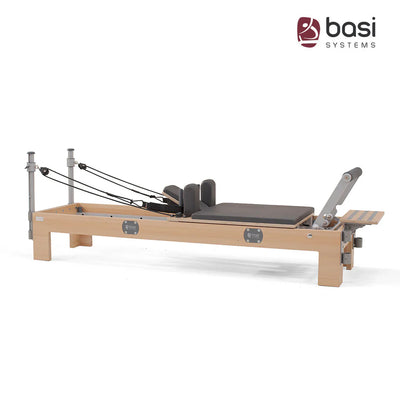
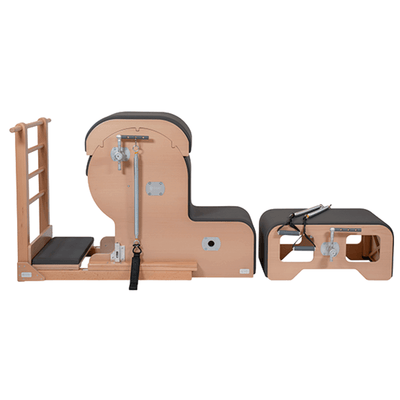
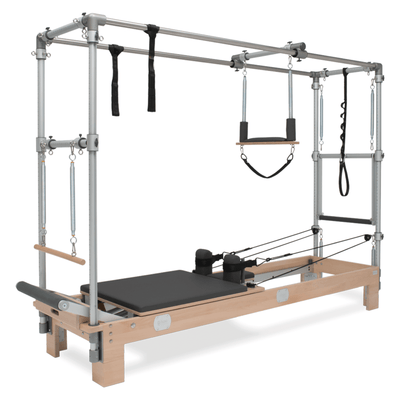
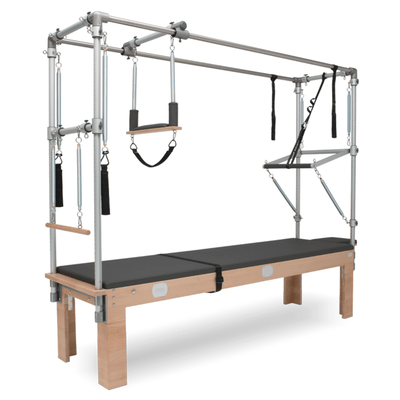
A folding Pilates reformer is far easier to place than a full sauna. Assembly time and space needs are part of the cost.

Ongoing Operating Costs
Running costs are small per use but add up:
- Electricity - saunas and massage chairs draw more than a walking pad
- Filters, covers, and consumables - replacement parts bought over time
- Cleaning and supplies - keeping upholstery and surfaces in shape
Ignoring electricity is a common mistake: a device used daily for years can quietly cost more to run than expected.
Build Your Own Home Gym ROI Calculator
The simplest home gym ROI calculator uses four inputs: total cost, monthly savings, monthly operating cost, and expected lifespan. Most online calculators hide their assumptions. Below is a transparent formula you can rebuild in any spreadsheet, plus a worked example.
The Formula, Defined Input by Input
- Total cost = purchase price + delivery + assembly or installation + any dedicated electrical work
- Monthly savings = gym membership avoided + therapy, massage, or class visits avoided + any insurance or wellness stipend you can actually claim
- Monthly operating cost = electricity + consumables (filters, covers, cleaning supplies) + an amortized repair allowance
- Net monthly savings = monthly savings minus monthly operating cost
- Payback period (months) = total cost ÷ net monthly savings
- Net ROI over lifespan = (net monthly savings × months owned) − total cost
Two refinements most calculators skip:
- Financing cost. Add card interest or installment fees to total cost. A 0% promotional rate still carries risk: miss the payoff window and the retroactive rate can erase months of savings.
- Resale credit. Subtract projected resale value from total cost before dividing. This shortens payback and is the input buyers most often forget.
Worked Example: Mid-Range Cardio Device
Assume a household buys a mid-range treadmill-style cardio machine. The numbers below are illustrative placeholders, swap in your own quotes.
| Input | Example Value |
|---|---|
| Purchase price | $1,800 |
| Delivery and assembly | $150 |
| Total cost | $1,950 |
| Gym membership avoided | $55/month |
| Class or therapy visits avoided | $40/month |
| Gross monthly savings | $95/month |
| Electricity | $6/month |
| Consumables and cleaning | $3/month |
| Repair allowance | $5/month |
| Net monthly savings | $81/month |
| Payback period | ~24 months |
At 24 months, the device pays for itself inside a typical 5-to-7-year lifespan, leaving three to five years of net-positive use. If usage drops to twice a week instead of four, savings do not change, so payback stretches only slightly.
Worked Example: High-Cost Recovery Device
Now assume a household buys a full-size infrared sauna.

| Input | Example Value |
|---|---|
| Purchase price | $4,500 |
| Delivery and installation | $600 |
| Dedicated outlet work | $250 |
| Total cost | $5,350 |
| Massage or spa visits avoided | $120/month |
| Gym membership avoided | $0 (kept separately) |
| Gross monthly savings | $120/month |
| Electricity | $35/month |
| Consumables and cleaning | $8/month |
| Repair allowance | $10/month |
| Net monthly savings | $67/month |
| Payback period | ~80 months |
Eighty months is nearly seven years, a very different story from the treadmill, and the honest answer most sauna marketing avoids. The purchase only clears break-even if the device lasts well past seven years and is used weekly. Drop avoided spa visits to twice a month and payback stretches past a decade, beyond many realistic lifespans.
Sensitivity: What Actually Moves the Answer
Run these three levers before you buy:
- Usage frequency. Halving sessions does not halve savings if the avoided cost is a fixed membership, but it does halve the value of avoided per-visit services like massage.
- Membership price. A $30/month gym versus a $150/month boutique studio changes payback by years on the same device.
- Resale value. A device holding 50% of its value after three years effectively cuts total cost in half for payback.

Home Fitness Equipment Cost Per Use Explained
Home fitness equipment cost per use is your total cost divided by the sessions you actually complete, the clearest way to compare a device against a gym membership.
The formula:
Cost per use = total cost ÷ (uses per week × 52 × years owned)
Usage frequency and consistency decide everything. A device used five times a week looks far cheaper per session than one used once a month.
| Usage Frequency | Sessions Per Year | Cost Per Use (Higher-Cost Device) | Cost Per Use (Lower-Cost Device) |
|---|---|---|---|
| Daily | ~365 | Low | Very low |
| 3x per week | ~156 | Moderate | Low |
| Once per week | ~52 | High | Moderate |
| Twice per month | ~24 | Very high | High |
The more you use it, the lower the cost per session.
Finding Your Home Gym Break-Even Point
Your home gym break-even point is the moment total savings catch up to total cost. Everything after is pure return.
To find it, you need three things:
Health Smart 2 Person Full Spectrum Infrared Sauna (Cedar) →
- Your total up-front cost
- Your net monthly savings
- Your expected equipment lifespan
Divide total cost by net monthly savings for break-even in months.
Break-even assumes you keep using the equipment. If usage drops, the break-even point moves further out; if usage stops, you never reach it. So treat break-even as a range, not a fixed date. Run three scenarios:
- Best case - you use it daily and stay consistent
- Likely case - you use it a few times a week with some gaps
- Worst case - you use it occasionally and lose momentum
If the worst case still breaks even within the equipment lifespan, the purchase is low-risk. If only the best case works, think harder.
Fitness Equipment Maintenance Costs and Resale Value
Fitness equipment maintenance costs are usually small but real, and resale value can change the whole calculation. Together they form the back half of total cost of ownership, the part most buyers ignore until year three.
Maintenance Costs by Equipment Type
Maintenance scales with mechanical complexity and moisture exposure. A rough pattern:
| Equipment Type | Typical Annual Maintenance | Main Cost Drivers |
|---|---|---|
| Walking pad or treadmill | Low | Belt lubrication, deck wear, motor brushes |
| Strength machine or rack | Very low | Upholstery, cable or pulley replacement |
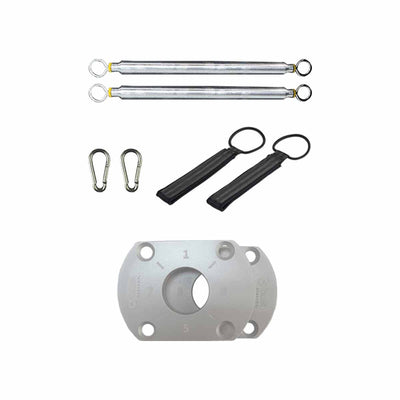
| Pilates reformer | Low to moderate | Springs, ropes, footbar hardware |
| Massage chair | Moderate | Motors, air bladders, upholstery, service calls |
| Infrared sauna | Low to moderate | Heater elements, control panel, wood care |
| Cold plunge or chiller | Moderate to high | Filters, sanitizer, pump, compressor service |
Two rules of thumb:
- Mechanical and motorized devices cost more to maintain than passive ones. A rack or adjustable dumbbells may need almost nothing for a decade.
- Water and heat accelerate wear. Saunas and cold plunges need consistent cleaning and part replacement to avoid early failure.
Budget a repair allowance as a monthly line item. Even $5 to $15 per month covers most minor failures and keeps the payback formula honest.
Depreciation: How Fast Value Actually Drops
Depreciation is not linear. The pattern most sellers see:
- Year 1: the steepest drop, because buyers assume it is used and warranty transfer is uncertain.
- Years 2-4: value levels off. A well-kept device holds a stable fraction of retail.
- Years 5+: value depends on condition and whether the model is still supported with parts.
Brand and demand matter as much as age. Popular models sell faster and hold value better than niche imports with no parts network. If a buyer cannot service the device, they will discount it heavily.
Resale Math: Turning Depreciation Into ROI
Resale value is a credit against total cost:
Adjusted total cost = total cost − projected resale value
Divide adjusted total cost by net monthly savings for a shorter, more realistic payback period.
Example: a device with a $1,950 total cost that you expect to sell for $700 after three years has an adjusted cost of $1,250. At $81/month net savings, payback drops from about 24 months to about 15 months, which is why resale value belongs in the calculator, not a footnote.
The Lifespan Lever
Equipment lifespan is the other lever. A durable unit lasting a decade spreads its cost across far more sessions than a cheap one that fails in two years. Compare devices on:
- Adjusted total cost (after resale credit)
- Cost per use across the realistic lifespan
- Annual maintenance as a percentage of purchase price
A higher-priced device with a long lifespan and strong resale can beat a cheaper one on every measure. A cheap device with no parts support and a two-year life almost never does.
Conclusion: Deciding If the Investment Pays Off
Home wellness equipment ROI analysis comes down to one honest question: will you use it enough to earn back what you spend?
If yes, the math usually works.
At Logic Health, we built our catalog around equipment that earns its place.
Get started with Logic Health and build a home setup that pays you back in both savings and vitality.
Frequently Asked Questions
How do you calculate ROI for home wellness equipment?
Start by adding your purchase cost, installation, and estimated annual maintenance. Then total the annual savings from avoided gym membership fees, massage therapy, and other services the equipment replaces. Divide annual savings by total investment cost to get a percentage. For example, if a $3,299 sauna saves $1,200 per year in spa visits and therapy, the simple ROI is about 36% annually. Factor in usage frequency and equipment lifespan for a more accurate picture.
What costs should you include when calculating home gym ROI?
Include the full purchase price, any installation or assembly fees, and ongoing costs like electricity, cleaning supplies, and replacement parts. For fitness equipment maintenance costs, budget roughly 1-3% of the purchase price annually. Also account for depreciation and resale value. A $799 WalkingPad X21 with low maintenance needs will have a different cost profile than a $9,999 massage chair that may require professional servicing.
How long does it take for home fitness equipment to pay for itself?
Payback period depends on what you replace. If you cancel a $150 monthly gym membership, a $799 WalkingPad X21 pays for itself in about 5.3 months. A $3,299 infrared sauna replacing $100 monthly spa visits breaks even in roughly 33 months. Higher-priced items like a $9,999 massage chair replacing $200 monthly therapy sessions take about 50 months. Usage frequency matters most; consistent use shortens payback significantly.
Does using home wellness equipment regularly improve its ROI?
Yes. Every additional session lowers your cost per use. If you use a $3,299 sauna 4 times weekly for 3 years, that is 624 sessions, bringing cost per use to about $5.29. At 2 times weekly, cost per use rises to roughly $10.58. Consistent workout habits directly improve ROI by spreading the initial investment across more uses and increasing the value of health outcomes you gain.