






 (307) 441-5030
Table of Contents
- Quick Comparison: Top Home Sauna Picks for 2026
- How to Choose the Best Sauna Brands for Home Use
- Top Home Sauna Brands and Models Reviewed
- Home Sauna Installation Requirements You Need to Know
- Benefits of Daily Sauna Use for Recovery and Longevity
- Long-Term Maintenance Costs and Care Tips
- Frequently Asked Questions
Last Updated: September 11, 2026
Quick Comparison: Top Home Sauna Picks for 2026
Finding the best sauna brands for home use means matching heater technology, cabin size, and electrical capacity to your space. This guide from Logic Health breaks down the top picks by use case, plus installation and maintenance details most buying guides skip.
Quick Picks:
- Best for Small Spaces: Thera360 Plus Portable Infrared Sauna, $1,428
- Best for Therapeutic Recovery: Medical 4 and Medical 5 Series, from $5,199
- Best Value for Couples: Health Smart 2 Person Full Spectrum, $2,999
- Best for Backyard Retreats: Mande MW16 ThermoWood Outdoor Sauna, $6,399
| Model | Capacity | Price | Best For |
|---|---|---|---|
| Thera360 Plus Portable | 1 person | $1,428 | Apartments, renters |
| Medical 4 | 2 people | $5,199 | Pain relief, recovery |
| Medical 5 | 3 people | $7,199 | Family recovery use |
| Health Smart 2 Person | 2 people | $2,999 | Couples on a budget |
| Health Smart 3 Person | 3 people | $3,499 | Small families |
| Mande MW16 Outdoor | 4 people | $6,399 | Backyard retreats |
How to Choose the Best Sauna Brands for Home Use
Start with three questions: how many people will use it, where will it sit, and what does your electrical panel support? Answer those and most of the catalog eliminates itself.

Infrared vs Traditional Sauna for Home: Which Is Right for You?
Infrared saunas warm the body directly through near, mid, and far-infrared wavelengths rather than heating the air. Traditional saunas heat the room to high temperatures and rely on ambient air to transfer heat. Infrared cabins run cooler, heat faster, and often plug into standard household circuits, so infrared usually wins on installation simplicity and running cost.
Wood Types and Material Quality
Cedar and hemlock dominate indoor cabin construction. Cedar resists moisture naturally; hemlock costs less and performs well when sealed. ThermoWood, used outdoors, is thermally modified to resist decay and moisture without chemical treatment.
Top Home Sauna Brands and Models Reviewed
Every model below comes from Logic Health's curated sauna lineup, selected for build quality and use-case fit.
Thera360 Plus Portable Infrared Sauna: Best for Small Spaces
The Thera360 Plus is the only pick here that folds down and moves with you. At 24 lbs with a 33" x 33" x 46" footprint, it fits an apartment corner and runs on a standard 110V-120V outlet at 900W.
It combines full-spectrum infrared panels, red and near-infrared light (600nm to 980nm), tourmaline heating, negative ion generation, and EMF shielding. Temperature adjusts from 100°F to 170°F with a 90-minute timer.
Pros: Portable, low electrical demand, multi-technology build Cons: Single-user only, no bench seating
Medical 4 and Medical 5 Series: Best for Therapeutic Recovery
The Medical series was developed with physicians and pain specialists, and it's the pick for recovery rather than relaxation alone. The Medical 4 fits two people with six heaters at 1700W; the Medical 5 fits three with nine heaters at 2200W.
Both use a Rapid Internal Heating System that reaches temperature in roughly 40 minutes instead of the typical 90. The Safe Cool Down System releases hot air gradually, and 3D Heat Therapy targets deep tissue.
Pros: Fast heat-up, medical-grade design, insulated airflow Cons: Higher price point, 385 to 455 lbs shipping weight
Health Smart Full Spectrum Saunas: Best Value for Couples
The Health Smart line is where most buyers should start. The 2 Person Hemlock model runs $2,999 and the 3 Person Cedar model runs $3,499, both with full-spectrum carbon infrared heaters and a heater under the bench for even distribution.

There's no rapid-heat system or medical branding, just solid full-spectrum technology at roughly half the Medical series price.
Pros: Strong price-to-feature ratio, cedar and hemlock options Cons: Slower heat-up, fewer therapeutic features
Outdoor Sauna Models: Best for Backyard Retreats
Outdoor cabins start with the Mande MW16 ThermoWood Sauna at $6,399, built from thermally modified wood that resists water and decay. Heater options range from a 6.0kW Harvia Kip with built-in controller to an 8.0kW WiFi model or a wood-burning M3 with chimney set.
The 4-Person Scandinavian ThermoWood Cube Kit at $8,499.97 adds panoramic glass and LED lighting with a five-year structural guarantee. At the top end, the ThermaSol Nordic Dawn arrives fully assembled and pre-wired for $47,899.97.
Pros: Year-round use, weather-resistant materials, true traditional heat Cons: Site prep required, higher cost, longer lead times
Home Sauna Installation Requirements You Need to Know
Most sauna returns trace back to electrical surprises, not product quality. Before you add a cabin to your cart, confirm three things: the voltage your model needs, the amperage the circuit can spare, and whether your panel has room for a new breaker.
Electrical Load, Amperage, and Voltage Requirements
Sauna heaters fall into two electrical classes, and the class determines whether you can plug in or need an electrician.
120V plug-in models (standard household circuit):
- Thera360 Plus Portable: 900W, runs on a standard 110V-120V outlet
- Medical 4: 1700W at 120V/15amp
- Medical 5: 2200W at 120V/15amp
A 15-amp, 120V circuit delivers a maximum of 1,800W (15 amps x 120 volts) (energy.gov). The Medical 5 at 2200W exceeds that, and even the Medical 4 at 1700W leaves only about 100W of headroom. A 120V sauna of this size should sit on a dedicated 20-amp circuit (2,400W capacity) so it isn't sharing load with other appliances.

240V hardwired models (dedicated circuit required):
- Outdoor cabins with 6.0kW Harvia Kip heaters
- 8.0kW WiFi-equipped Harvia heaters
- Wood-burning M3 setups (no electrical draw, but chimney and clearance requirements apply)
A 6.0kW heater draws 25 amps at 240V; an 8.0kW heater draws roughly 33 amps. Both require a dedicated 240V circuit, typically a 30-amp or 40-amp breaker, and 10-gauge or 8-gauge copper wire depending on run length. These are hardwired, not plug-in.
Panel Capacity, Breaker Sizing, and Wire Gauge
Before ordering a 240V cabin, count the open breaker slots in your panel. A 240V sauna circuit uses a double-pole breaker, which occupies two slots. If your panel is full, you're looking at a subpanel install or service upgrade, a cost that lands before the sauna does.
A few practical rules most buyers learn too late:
- Breaker sizing: Match the breaker to the heater's nameplate amperage plus the 80% continuous-load rule. A 25-amp heater needs a 30-amp breaker minimum; a 33-amp heater needs a 40-amp breaker.
- Wire gauge: 10-gauge copper handles 30 amps; 8-gauge handles 40 amps. Undersized wire is a fire risk, not a shortcut.
- Run length: Long wire runs from panel to cabin increase voltage drop. Runs over roughly 100 feet may require the next size up in wire.
- GFCI protection: Most jurisdictions require GFCI protection on sauna circuits, especially in wet or outdoor locations (osha.gov). Confirm with your electrician.
Permitting, Zoning, and HOA Rules for Outdoor Saunas
Indoor infrared cabins generally need no permit, they're treated like furniture. Outdoor structures are a different story.
Most municipalities classify a permanent outdoor sauna as an accessory structure, triggering setback requirements, sometimes a maximum square footage before a permit is required, and occasionally a foundation or frost-depth footing requirement. A common threshold is 120 to 200 square feet before a building permit kicks in, but this varies by jurisdiction.
If you live under a homeowners association, review the CC&Rs before ordering. Many HOAs restrict outbuildings, require architectural review, or cap the height and footprint of accessory structures. Approval after delivery is far harder than before.
A practical sequence: check zoning for accessory structures, check HOA covenants, then check whether your model sits on a slab, gravel pad, or deck. Each foundation type has its own permit and site-prep implications.
DIY vs. Professional Assembly: Time and Skill Requirements
Assembly difficulty varies more than price does across this category.
- Thera360 Plus Portable: Sets up in minutes. No tools beyond what's in the box. A single person can move and assemble it.
- Health Smart and Medical series: Modular panel system. Two people can assemble in a few hours. Panels lock together; heaters and controls are pre-wired. No electrical work beyond plugging in (120V models).
- Mande MW16 and similar outdoor cabins: Half-day to full-day build for two people. Requires a level base, panel alignment, roof assembly, and, for 240V heaters, a licensed electrician for the final connection.
- ThermaSol Nordic Dawn: Arrives fully assembled and pre-wired. The only work is site prep and final hookup by an electrician.
A realistic rule: if the model is 120V and modular, a handy homeowner can handle it. If it's 240V, wood-burning, or sits on a permanent foundation, budget for an electrician and possibly a contractor. The electrical connection alone typically requires a licensed electrician and an inspection.
Benefits of Daily Sauna Use for Recovery and Longevity
Regular sauna sessions support cardiovascular health, circulation, and muscle recovery through sustained heat exposure. Many users report better sleep and reduced stress with consistent use.
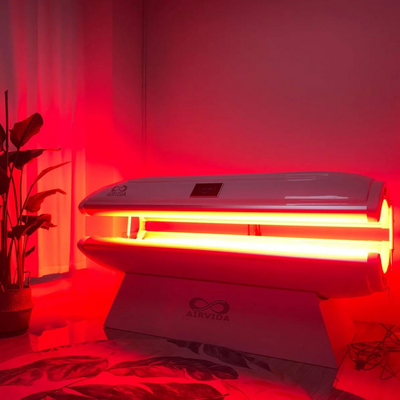
Infrared heat raises core body temperature gradually, promoting blood flow and supporting natural detoxification through sweating. Sessions of 15 to 30 minutes, three to five times per week, are a common starting point (PubMed). Pairing sauna use with cold plunge or red light therapy extends the recovery window further.
Long-Term Maintenance Costs and Care Tips
Budget for more than the purchase price. Ownership cost is recurring and varies sharply by heater type, cabin material, and how often you use the sauna. Here's what ongoing ownership looks like by cost category.
Electricity: The Largest Recurring Cost
Electricity is the biggest variable in sauna ownership, scaling directly with heater wattage and session length.
- 120V infrared cabins (900W-2200W): A 1,700W Medical 4 running a 45-minute session uses roughly 1.3 kWh. At a typical residential rate of about 16-17 cents per kWh, that's roughly 20-22 cents per session. Daily use lands around $6-$8 per month.
- 240V traditional heaters (6.0kW-8.0kW): A 6.0kW heater running a 60-minute session (including heat-up) uses roughly 6 kWh. At the same rate, that's about $1 per session. Daily use lands around $30 per month; three-times-per-week use lands around $12-$15 per month.
Buyers often underestimate heat-up time. Traditional heaters can take 30-45 minutes to reach temperature, and that warm-up draws full wattage. Infrared cabins heat faster and draw less, so their running cost is a fraction of a traditional sauna's.
Wood Care and Sealing
Indoor cedar and hemlock cabins need minimal wood care, wipe benches after sessions and keep ventilation clear. Outdoor ThermoWood resists decay without chemical treatment but still benefits from an annual inspection.
- Outdoor wood sealing or oiling: Annual, roughly $50-$150 in materials if you do it yourself; $200-$500 if you hire it out.
- Seal and hardware inspection: Annual. Check door gaskets, window seals, and any exposed fasteners. Replacement gaskets typically run $20-$60 per door.
- Roof and drainage check: Annual for outdoor cabins. Standing water is the fastest path to rot, even in ThermoWood.
Heater and Component Maintenance
- Heater element check: Every 1-2 years for traditional and outdoor models. A failing element shows up as longer heat-up times or uneven temperature. Replacement elements typically run $50-$200 depending on brand and wattage.
- Sauna stones: Traditional heaters use stones that can crack or crumble over time. Expect to replace them every 1-3 years; a full set typically runs $40-$100.
- Filter and vent cleaning: Quarterly for all enclosed cabins. Clogged vents trap moisture and shorten heater life.
- Control panel and sensor check: Annually. Sensors drift over time and can cause temperature inaccuracy.
Cleaning Supplies and Consumables
- Bench cleaner: A sauna-safe cleaner runs $15-$30 per bottle and lasts several months. Avoid household cleaners, they can damage wood and off-gas at high temperatures.
- Towels and bench covers: Recurring but minor; most users keep a dedicated set.
- Deep clean: Monthly. Wipe benches, treat for moisture, and check for any musty odor that signals a ventilation problem.
A Realistic Annual Cost Estimate
For a 120V indoor infrared cabin used three to five times per week: roughly $80-$150 per year in electricity, plus $30-$60 in cleaning supplies. Total: about $110-$210 per year.
For a 240V outdoor traditional sauna used three times per week: roughly $150-$250 per year in electricity, plus $100-$300 in wood care and heater maintenance. Total: about $250-$550 per year.
These are estimates, not guarantees, electricity rates vary by region, and outdoor cabins in wet climates need more frequent wood care than those in dry ones.
| Ongoing Cost | Frequency | Typical Range | Notes |
|---|---|---|---|
| Electricity (120V infrared) | Per session | ~$0.20-$0.25 | Lower for 900W portable models |
| Electricity (240V traditional) | Per session | ~$1.00 | Higher for 8kW heaters |
| Wood sealing (outdoor) | Annual | $50-$500 | DIY vs. professional |
| Heater element replacement | Every 1-2 years | $50-$200 | Traditional and outdoor models |
| Sauna stones | Every 1-3 years | $40-$100 | Traditional heaters only |
| Filter and vent cleaning | Quarterly | DIY | All enclosed cabins |
| Deep clean | Monthly | DIY | Wipe benches, treat for moisture |
Frequently Asked Questions
Which type of sauna is best for home use?
Infrared saunas are often the best fit for home use because they warm the body directly with near, mid, and far infrared wavelengths instead of heating the air. This means lower operating temperatures, faster warm-up times, and simpler electrical needs. Traditional saunas deliver a more intense, humid heat but require more space, ventilation, and power. For most homes, a full-spectrum infrared sauna offers the best balance of therapeutic benefit and practical installation.
What are the key differences between infrared and traditional saunas?
Infrared saunas use carbon or ceramic heaters to emit infrared wavelengths that warm your body directly, operating between 100°F and 170°F. Traditional saunas heat the air and rocks to 180°F-200°F or higher, creating a humid environment. Infrared models typically run on standard 120V outlets and need less ventilation, while traditional saunas often require 240V wiring and dedicated exhaust. Infrared is easier to install indoors, but traditional delivers a more intense sweat.
How much space do I need for a home sauna?
Space needs depend on the model. A portable infrared sauna like the Thera360 Plus folds out to roughly 33 by 33 by 46 inches, fitting in a corner of a bedroom or spare room. Two-person cabins generally need about 48 by 42 inches of floor space, while three-person models require closer to 63 by 42 inches. Outdoor barrel and cube saunas need a level patio or deck area plus clearance for ventilation and access.
Are home saunas worth the investment for health benefits?
For many users, yes. Regular sauna sessions support cardiovascular health, muscle recovery, stress reduction, and detoxification through sweating. Daily use is linked to improved circulation and relaxation. The value depends on how consistently you use it. A portable infrared sauna at around $1,428 offers a low-commitment entry point, while full-spectrum cabin models at $2,999 and up suit households that want a permanent wellness fixture.
What should I look for when choosing a home sauna brand?
Focus on heater type (carbon, ceramic, or full-spectrum), wood quality (cedar and hemlock resist moisture best), electrical requirements, and warranty coverage. Check whether the sauna arrives pre-assembled or as a kit, and confirm the return policy. A brand that offers free shipping, 24/7 support, and clear installation documentation reduces the risk of a frustrating setup. Also verify the amperage and voltage match your home's electrical panel before ordering.
Choosing the best sauna brands for home use means balancing electrical capacity, space, and how you'll actually use the cabin. Logic Health carries the full range covered here, from the portable Thera360 Plus to fully assembled outdoor cabins, with free shipping on orders over $200, a 30-day return policy, and 24/7 customer support to help you match a model to your space. Shop now and start building a daily recovery routine that fits your home.